








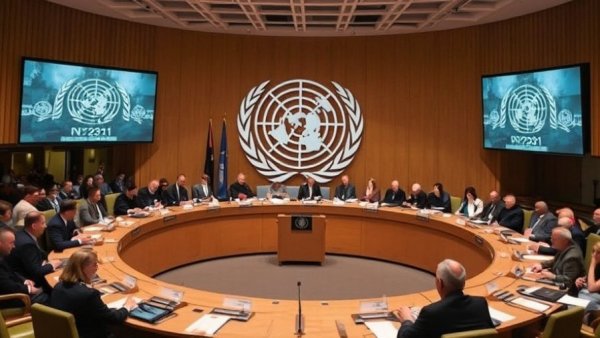
COLLAPSE OF COP31: A STRATEGIC FAILURE IN CLIMATE NEGOTIATIONS
The recent collapse of talks at COP31 has raised profound questions about the future of international climate negotiations and the commitment to urgent climate action. Held in Antalya, Türkiye, this year’s Conference of the Parties (COP) to the United Nations Framework Convention on Climate Change (UNFCCC) failed to reach a consensus after nearly three weeks of stalled discussions, with disagreements escalating over fossil fuel reliance and climate finance. UK Prime Minister Andy Burnham offered a stark warning, stating that the “consensus we once enjoyed on science and climate has gone,” underscoring a growing divide that poses serious risks to global climate initiatives.
Realities of Climate Finance in Emerging Markets
One pivotal issue at COP31 was the overwhelming need for climate finance, particularly for developing nations. The Paris Agreement had designed a framework where prosperous nations would offer financial resources to assist developing countries with mitigation strategies and adaptation to climate challenges. However, at COP31, no agreement was reached on the funding timeline or the amount of financial support that would be provided, leaving countries like Nigeria, Bolivia, and Peru grappling with extreme financial pressures as energy prices surged due to geopolitical instability.
Such financial obligations are amplified by the need for an estimated $1.3 trillion annually in investments for emerging market economies outside China. With developed nations previously committing to a roadmap for $300 billion in annual support, the question remains: how can these funds be mobilized effectively to prevent a global climate disaster? The risk of further delay may also jeopardize critical trade relations, particularly for import-export manufacturers who rely on stable energy prices and predictable logistics.
Stalled Progress and Diverging Interests
While the summit itself saw a breakdown in negotiations, the role of the private sector demonstrated a contrasting narrative. Business leaders and banks were quietly securing deals amidst the chaos, hinting at a potential pivot toward green investment solutions as a supplement to governmental actions, potentially indicating an era where private capital might fill the void left by insufficient public funding. Yet, as these financial solutions evolve, they may inadvertently neglect vulnerable groups who lack the capacity to engage with emerging markets. The failure to address fossil fuels in the final proposal served as a ‘red line’ for many nations, suggesting that progress may come at the expense of the most impacted communities.
Lessons from Past COP Summits
The setback at COP31 bears resemblance to past failures, particularly the 2009 conference in Copenhagen, which followed a period of economic turmoil. The current geopolitical landscape, especially the war in Iran, has once again highlighted how external factors can severely disrupt climate negotiations. This has led to an alarming backdrop where oil profits surged for some countries, leaving others further behind. The ongoing struggle for fair trade measures will be pivotal for import-export companies navigating these fluctuating dynamics.
Future Perspectives: The Role of Private Sector
As the public sector grapples with climate financing, there is a growing opportunity for the private sector to lead the way. Green lending initiatives and innovations in energy infrastructure could drive meaningful progress in the transition to sustainable practices. Nevertheless, private solutions must consider equitable distribution and ensure they do not leave marginalized nations behind.
Implications for Import-Export Trade Dynamics
For import-export companies, the ramifications of the collapse at COP31 reach beyond climate commitments. Rising tariffs and constraints on energy supplies could create further challenges in international trade. Companies must adapt strategies that embrace sustainable practices, ensuring compliance with both domestic and international regulatory changes stemming from climate negotiations.
Moving Forward: The Path Ahead
To mitigate these challenges, policymakers and business leaders must engage in dialogues that prioritize not just ambitious frameworks for climate action, but also the economic realities facing the most vulnerable countries. The importance of establishing a robust, collaborative global response cannot be overstated.
It is imperative for those involved in import-export to stay attuned to the evolving landscape of climate commitments, tariffs, and trade regulations emerging from the outcomes of COP31. As negotiations continue, collaboration will be key to navigating these complex scenarios.





Write A Comment