







Add Row
Add Element
Global Trade News
update
Global Trade News
update
Add Element
SCHEDULE YOUR INTERVIEW 
  • Home
  • Categories
    • Policy Pulse
    • Compliance Corner
    • Market Movers
    • Trade Trends
    • Export Essentials
    • Import Insights
    • Regulatory Roundup
    • Global Trade News Blog
    • More Spotlights
    • More Videos
  • update
  • update
  • update
  • update
  • update
  • update
  • update
March 13.2025
3 Minutes Read

Uzbekistan Opens Doors to $2 Billion Factoring Industry: A Bright Future for Trade

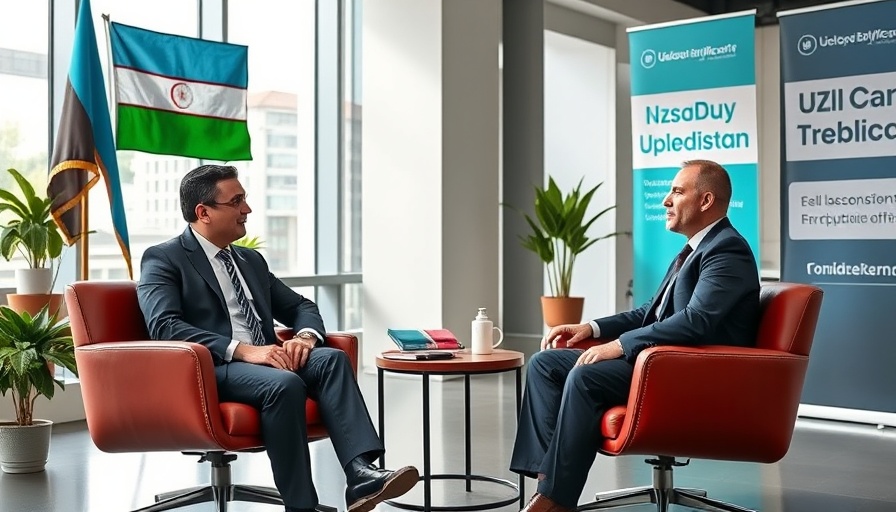
Interview in Uzbekistan highlighting factoring industry developments.

Uzbekistan's Leap into Factoring: A Game Changer for Trade

Uzbekistan is on the brink of transforming its economic landscape, thanks to the reintroduction of factoring services that aim to bolster regional trade and support small and medium enterprises (SMEs). As part of a directive instituted in August, Uzbek banks are now required to provide factoring services that allow businesses to sell their outstanding invoices, thereby gaining immediate access to cash. This initiative is particularly vital for SMEs that need liquidity to operate efficiently and expand their market reach.

Why Factoring Matters for SMEs

The restructured factoring services represent a lifeline for Uzbekistan's SMEs. As Foziljon Ulashev, Director of the Small and Medium Businesses Department at Aloqa Bank, explained, the funding received through factoring is critical for ensuring continuity in manufacturing processes and replenishing working capital. Without access to such services, these businesses often face long turnaround times, undermining their ability to grow and diversify their operations.

Literature on Regional Trade Dynamics

Central Asia, often overshadowed by the larger economies of China and the oil-rich Middle East, is finally gaining international attention. Uzbekistan's drive to implement efficient factoring arrangements is designed not just to invigorate its own economy but to enhance trade across the region. Historical challenges, such as poor infrastructure and high trade barriers, have stymied growth, creating an urgent need for innovations like factoring to facilitate transactions and ease entry into the global marketplace.

The Role of Aloqa Bank in Modernizing Financial Solutions

Aloqa Bank stands out as a pioneer in introducing digital factoring services tailored for SMEs. Aiming to unlock liquidity with unparalleled efficiency, the bank has launched an online platform that enables businesses to submit applications electronically. This not only eliminates burdensome paperwork but also significantly reduces processing times—an essential upgrade for businesses that are often operating with tight schedules and limited resources.

Projected Impacts on Trade Finance

With the potential market for factoring pegged at nearly $2 billion, the enhance liquidity offerings via Aloqa Bank's services could catalyze significant growth. According to forecasts, the factoring services are expected to finance approximately $23 million in trade by 2025, signaling a robust uptick in local SMEs’ economic activity. This growth follows a period of increased reforms in Uzbekistan, including efforts to streamline business regulations and liberalize the economy, establishing the country as a competitive player in the region.

Future Trends in Central Asia's Trade

The burgeoning factoring market in Uzbekistan is just one part of a broader economic renaissance in Central Asia. As various stakeholders, including regulators and financial institutions, work together to deconstruct outdated barriers, the landscape is evolving. The ambition is clear: establish Uzbekistan not only as a hub for domestic trade but also as a key player in facilitating commerce across Central Asia. By integrating modern financial solutions and expanding access to capital, Uzbekistan aims to draw foreign investment and forge stronger economic ties with its neighbors.

Conclusion: Embracing Change for a Brighter Future

As Uzbekistan opens its doors to the factoring industry, it is set on a path to reshape regional trade dynamics. For SMEs, the reintroduction of factoring services offers a critical pathway to financial stability and growth, encouraging resilience and innovation. Businesses involved in import and export can benefit significantly from these developments, making it imperative for them to stay informed and engaged with policy changes. By leveraging such financial solutions, Uzbekistan is well-positioned to transform its economic prospects and contribute to regional progress.

Export Essentials

50 Views

Write A Comment

*
*
Related Posts All Posts
02.24.2026

Unlocking Africa's Trade Potential: The Role of Women-Owned Enterprises

Update Why Gender Inclusivity is Key to Africa’s Trade Growth As Africa endeavors to scale its intra-continental trade under the ambitious framework of the African Continental Free Trade Area (AfCFTA), a pivotal challenge remains: the exclusion of women-owned enterprises from trade finance. Despite constituting over 40% of Africa's small and medium-sized enterprises (SMEs), women-led businesses continue to encounter systemic barriers that inhibit their participation in export markets. Understanding the Trade Finance Gap The financing gap for trade in Africa is staggering, estimated to exceed $100 billion annually. This financial chasm not only affects overall economic growth but disproportionately impacts women entrepreneurs, who often find themselves at a disadvantage due to broader structural inequalities. Over 60% of women-led SMEs are excluded from formal training programs essential for navigating trade complexities, compounding their struggle to engage in cross-border commerce. The Cost of Exclusion: Insights from Recent Reports The IFC report reveals that specific elements of trade financing exacerbate the difficulties faced by women-led businesses in accessing trade capital. Challenges such as limited collateral, informal operations, and a lack of sufficient support networks significantly reduce their visibility and opportunities to secure necessary financing. A Policy Imperative: Bridging the Gender Gap Governments and financial institutions must take decisive action to close the trade finance gap facing women. Tailored policies that foster a nurturing environment for women entrepreneurs can catalyze their inclusion in trade. According to an OECD policy report, initiatives harnessing fintech can significantly enhance women’s access to financial services, providing both economic mobility and equity. Innovative Solutions: Leveraging Fintech for Inclusion Financial technology (fintech) represents a transformative opportunity in addressing the financial exclusion experienced by women entrepreneurs. These technological advancements, combined with proactive regulatory measures, can create sustainable pathways to empower female business owners. Mobile money and micro-insurance products designed with women's needs in mind are essential to overcoming existing barriers, enabling women to participate actively in the global market. Impact on Economic Development: Why It Matters The participation of women in trade doesn't just serve gender equality; it has profound implications for economic development across the continent. By empowering women-owned enterprises, Africa can unlock the economic potential of SMEs, which currently provide up to 90% of employment in certain countries. Ensuring that women can access trade financing is pivotal for substantial structural empowerment and economic growth. Concluding Thoughts: A Call to Action As the landscape of African trade continues to evolve, it is vital to recognize that the integration of women into this framework is not only a matter of equity but one of economic necessity. Companies operating within the import-export ecosystem need to advocate for robust policies that level the playing field and support women entrepreneurs. Investors must recognize their potential and tap into the rich contributions women-owned businesses can make to Africa's economic narrative. Closing the trade finance gap is an imperative worth investing in, for the benefits extend far beyond the business realm. Meanwhile, at a grassroots level, women entrepreneurs must be encouraged and supported to formalize their businesses and connect with networks that can provide necessary training and financing opportunities. Bridging this gender gap can reshape the economic landscape of Africa, fostering a more inclusive and competitive marketplace.

02.21.2026

Harnessing LNG Power: Vitol’s $3 Billion Investment at Durban Port and Its Trade Impact

Update Vitol's Strategic Move in South Africa: The $3 Billion LNG Power Plant As global energy demands shift and the push for cleaner energy sources intensifies, Vitol's backing of a $3 billion liquefied natural gas (LNG) power station at Durban's bustling port signals a significant step in South Africa's energy transition. With gas projected to play an increasingly vital role in reducing reliance on coal, this initiative not only stands to enhance the local economy but also positions Vitol to capture a growing market in green energy. Understanding the Infrastructure Challenges A recent report from Verto highlights that inadequate port and rail infrastructure is a critical barrier to trade in South Africa. Overwhelmed by inefficiencies, particularly affecting perishable agricultural exports, the current state of infrastructure demands urgent attention. As stated by President Cyril Ramaphosa, upcoming public-private partnerships will target these issues, particularly within ports and railways, providing a backdrop against which the Vitol project could thrive. The Role of LNG as a Transitional Fuel While LNG is not entirely decarbonized, it serves as a viable 'bridge fuel' by facilitating a transition toward cleaner energy. This project at Durban aims to tap into this potential, with plans for a high-capacity combined cycle gas turbine (CCGT) power plant that is expected to produce between 1,000 to 1,800 megawatts. The strategic significance of this shift is underscored by South Africa's aim to reach 16 gigawatts of new gas generation capacity by 2039. Investment Opportunities for Import Export Companies For import-export companies navigating the complex landscape of tariffs and trade, the emergence of gas as a cornerstone of South Africa's energy framework presents opportunities for strategic investments. As more sectors seek reliable energy sources, the anticipated reduction in energy costs could foster growth in export-heavy sectors like agriculture, which is already set to reach $13.7 billion in exports by 2026. Broader Economic Implications The development at Durban port is not an isolated venture; it is emblematic of a broader movement towards modernization within South Africa. With infrastructure improvements under consideration as part of the master plan for the Durban marine terminal, every aspect from equipment technology to operational efficiency will receive attention. These enhancements hold the potential to alleviate congestion and inefficiency that has long held back agricultural export potential. Future Projections: A Balanced Energy Portfolio The integration of LNG into South Africa's energy portfolio does not come without its challenges, especially in the context of public perception and environmental regulations. However, achieving a balanced energy portfolio that incorporates both renewable resources and transitional fuels such as LNG could pave the way for a more sustainable future. As such developments unfold, the reaction from investors, particularly from the import-export sector, will be crucial in determining the success of this new energy initiative. Conclusion: Taking Action in the Evolving Trade Landscape In light of these developments, import-export companies should consider how they can leverage this new energy landscape. Engaging with emerging opportunities, understanding the implications of tariffs and trade agreements, and positioning oneself within a transitioning economy will be crucial for sustained growth and success in the South African market.

02.19.2026

Bridging the $5.7 Trillion MSME Finance Gap: A Roadmap for Inclusion

Update The $5.7 Trillion MSME Finance Gap: A Deep-Dive The discussion around micro, small, and medium enterprises (MSMEs) often highlights a staggering statistic: the MSME finance gap stands at a whopping $5.7 trillion. This figure reveals not just a deficit in financial provision, but an indication of systemic issues entrenched within the financial landscape. Understanding Systemic Barriers to Finance One might assume that women-owned businesses and communities at risk should be the primary targets for financial inclusion initiatives. However, as pointed out by the International Finance Corporation (IFC), this exclusion is not merely a matter of bias; rather, it's a composite of structural barriers that significantly disadvantage these groups. In particular, the reliance on collateral for loans adversely affects women, as assets often remain under the control of male household members. The interview in the podcast with Adel Meer from the World Bank Group illuminates these points. Meer notes that lending practices are heavily predicated on offering collateral. If women cannot provide such collateral, they find themselves ineligible for loans. Moreover, systemic inefficiencies in data reporting amplify the issue, as they create an incomplete picture of how MSMEs are actually financed. Current Initiatives Aiming to Combat the Gap Efforts to bridge this gap are underway, with organizations like the IFC focusing on innovative solutions to offer more tailored financial services. It’s essential to consider how fintech solutions can play a role in this growth. For instance, systems like Brazil’s Pix and India's UPI have shown promise in capturing non-traditional financing activity, providing a clearer pathway towards understanding the unique financial landscapes faced by MSMEs. The Intersection of Global Trends and Local Necessities As global trade dynamics shift, the influence of tariffs and external economic conditions cannot be overlooked. MSMEs must adapt to these changes to secure their place in the market. For many import-export companies, navigating these tariffs can either be a hurdle or an opportunity. Understanding local market conditions while thinking globally is crucial for enhancing financial viability. Broader Implications for Future Financial Inclusion There lies a critical link between accurately reporting MSME financing needs and fostering inclusivity. Data-driven ideation must guide the strategies utilized by institutions offering financial products. If MSMEs are unable to track and communicate their financial activities effectively, inherent risks will perpetuate. Furthermore, collaboration between development institutions and private investors remains paramount. Solutions tailored to unique financial conditions can foster long-term resilience for MSMEs, ensuring that financial services not only meet current demands but anticipate future challenges. Concluding Thoughts: A Call for Responsibility in Financing The financial sector's potential to motivate economic growth is obvious. However, as discussions around environmental, social, and governance (ESG) responsibilities loom larger, the burden of proving compliance should not rest disproportionately on the shoulders of MSMEs. Ensuring that financial services remain accessible, affordable, and responsible will be the true litmus test of our economic systems moving forward. It is crucial to foster an environment where MSMEs can thrive without the constant threat of overwhelming obligations that may stifle innovation and growth. Ultimately, enhancing financial inclusion for MSMEs is not just a responsibility of financial institutions; it involves a collective push from the government, corporations, and community-oriented initiatives. Only through a unified front can we hope to close the MSME finance gap and promote equitable growth across sectors.

Terms of Service

Privacy Policy

Core Modal Title

Sorry, no results found

You Might Find These Articles Interesting

T
Please Check Your Email
We Will Be Following Up Shortly
*
*
*