Add Row
Add Element
Global Trade News
update
Global Trade News
update
Add Element
SCHEDULE YOUR INTERVIEW 
  • Home
  • Categories
    • Policy Pulse
    • Compliance Corner
    • Market Movers
    • Trade Trends
    • Export Essentials
    • Import Insights
    • Regulatory Roundup
    • Global Trade News Blog
    • More Spotlights
    • More Videos
  • update
  • update
  • update
  • update
  • update
  • update
  • update
May 23.2025
3 Minutes Read

Urgent Action Needed: Animal Disease Outbreaks Could Put $100 Trillion in Global Trade at Risk

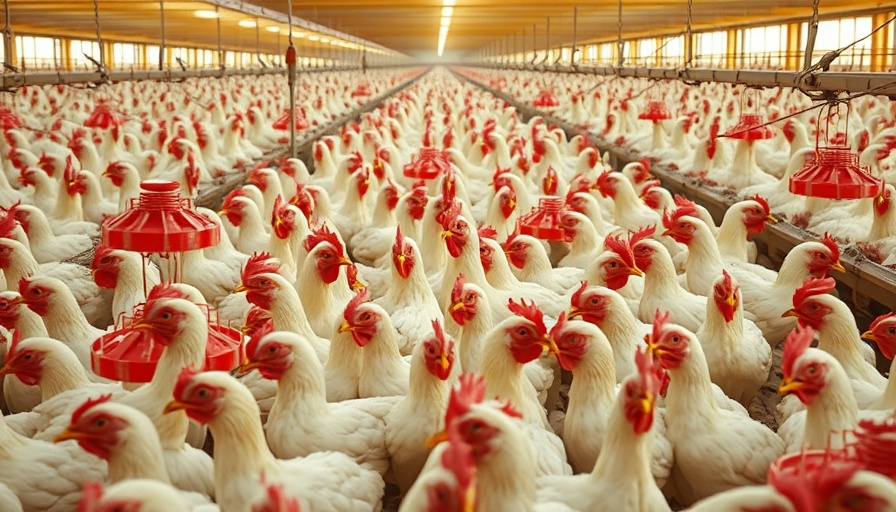
Dense group of chickens in a crowded poultry farm setting.

The Grave Economic Threat of Animal Disease Outbreaks

In a stark warning, the World Organisation for Animal Health (WOAH) has projected that animal disease outbreaks, particularly fueled by antimicrobial resistance (AMR), could disrupt global trade to the tune of $100 trillion by 2050. This alarming forecast stems from a comprehensive report that underscores the urgent necessity for action to combat AMR, especially as the ramifications of outbreaks become increasingly pronounced in international trade.

Global Trade and Supply Chain Vulnerabilities

The recent avian influenza outbreak in Brazil has thrown the fragility of international food supply chains into sharp relief. Brazil, known as the largest poultry exporter globally, saw immediate export bans from numerous countries following the discovery of the highly pathogenic avian influenza (HPAI) within its borders. This incident isn't an isolated one; over the past two decades, more than 633 million birds have been lost to such outbreaks, incurring enormous economic damage and severely disrupting trade.

Impact on Food Security

Antimicrobial resistance poses a dual threat to global food security and economic cohesion. The report cites that approximately 2 billion people are at risk of food insecurity due to diseases that antimicrobial use could have mitigated. Although there has been a commendable 5% decrease in antimicrobial use in animals between 2020 and 2022, the decline remains inadequate in addressing the severity of AMR. Regions like Europe and Africa have made notable strides, but the pace of progress must accelerate significantly to avert disaster.

Economic Ripple Effects on Exporters and Consumers

The repercussions of these animal diseases extend beyond the affected animals themselves. Trade barriers enforced in response to outbreaks create a domino effect; poultry exporters lose access to critical international markets while importing nations wrestle with supply shortages. This imbalance can lead to elevated prices for consumers, with low-income populations—who often rely on poultry as a primary protein source—particularly vulnerable. Observing how swiftly trade restrictions arise highlights just how interconnected our global trade networks are and emphasizes the importance of maintaining healthy animal populations.

A Thorny Path Ahead: Future Predictions and Challenges

The trajectory of animal health in connection with global trade appears precarious unless we collectively tackle the challenge of AMR. Experts like Javier Yugueros-Marcos, head of the antimicrobial resistance department at WOAH, stress that the indiscriminate use of antimicrobials is a detrimental practice that must be curtailed. The data shows that over 943 poultry outbreaks and significant cases in mammalian species have been recorded in recent years, foreshadowing potential widespread implications for global health and economic stability.

Actionable Insights for Import-Export Companies

For import-export companies navigating these turbulent waters, fostering a resilient supply chain is paramount. Companies should consider adopting best practices in biosecurity measures, collaborating with regulatory bodies for compliance, and investing in sustainable farming practices that align with global health goals. Moreover, raising awareness about antimicrobial use and its consequences should be integrated into training and operational protocols.

In conclusion, the warnings outlined in WOAH's report echo a call to arms for all stakeholders in the global trade ecosystem. Investing in health, research, and sustainable practices today could yield significant long-term benefits, potentially safeguarding against the dire predictions of emerging animal diseases crippling the economic landscape.

Call to Action: To learn more about how you can protect your business and contribute to sustainable practices in trade, visit our website for resources and expert insights.

Export Essentials

52 Views

Write A Comment

*
*
Please complete the captcha to submit your comment.
Related Posts All Posts
04.18.2026

Unlocking Agricultural Potential: The Digitalisation of Cambodia's Export Boom

Update The Digitalisation of Agriculture: A Game Changer for Cambodia The rapid transformation of Cambodia's agricultural sector underscores a significant economic pivot. While the nation has long depended on agriculture—contributing 20% to GDP and employing over a third of the workforce—recent statistics reveal that agricultural exports reached approximately 14.9 million tonnes in 2025, showcasing a remarkable 27.8% year-on-year growth. This boom highlights the potential of technology to revolutionize trade practices within the agricultural industry. Navigating Challenges Linked to Phytosanitary Certification Despite this progress, the Cambodian agricultural sector faces formidable challenges, particularly regarding its sanitary and phytosanitary (SPS) processes. The manual, paper-based system hampers exporters, compelling them to engage in cumbersome bureaucratic procedures. Consequently, efforts to secure essential certifications have become a barrier to efficient market access, stunting the growth of both small and medium-sized enterprises (SMEs) and other stakeholders in agriculture. The inefficiencies in the current certification protocol result in higher transaction costs, delays, and potential losses due to documentation issues. The existing National Single Window (CNSW) module, crucial for streamlining agricultural trade, fails to meet international standards, further complicating the process. To address this, Cambodia's government must enhance digital infrastructure to facilitate efficient, standard-compliant certifications. Government Initiatives: Paving the Path to Digital Trade Recognizing these challenges, Cambodian authorities have initiated a push towards digitalisation, exemplified by the Digital Economy Framework (2021–2035). This governmental strategy is designed to bolster trade facilitation by integrating SMEs into cross-border e-commerce, ultimately expanding market access for Cambodian products. Although these initiatives are commendable, success hinges on addressing the digital divide within the SPS certification landscape. For instance, connecting to the ePhyto Hub—an initiative aimed at digitizing plant health certification—can significantly enhance efficiency. Unfortunately, Cambodia's alignment with international standards remains fragmented, and harmonization of SPS measures is necessary to unlock trade potentials. Major trade partners, like China, impose strict health regulations and penalties for non-compliance, necessitating a unified approach to compliance and certification. Examples of Successful Trade Digitalisation Models Cambodia can take cues from other nations that have successfully embraced digital trade frameworks. Countries like Thailand and Morocco have implemented robust ePhyto solutions, digitizing phytosanitary certification processes. By understanding their approaches, Cambodia can better navigate its own certification hurdles and enhance its position in the global market. For instance, the collaboration between the Global Alliance for Trade Facilitation and Cambodia’s General Directorate of Agriculture aims to leverage technology to digitize the entire SPS certification cycle. Introducing electronic systems would not only reduce processing times but also streamline data management and transparency across the agricultural supply chain. Future Outlook and Strategic Recommendations For Cambodia to truly capitalize on its agricultural export potential, ongoing investment in digital infrastructure is vital. This includes upgrading the CNSW and integrating e-Phyto systems to minimize rejections and establish a more seamless trading environment. Furthermore, aligning with international standards will present a competitive edge, paving the way for Cambodia to emerge as a key agricultural player within ASEAN and other global markets. Ultimately, the concerted efforts towards digitising agricultural trade will improve access for MSMEs and can propel Cambodia as a net agricultural exporter. However, achieving these objectives will depend on strategic investments, regulatory reforms, and international cooperation to overcome the inherent challenges of certification in the agricultural sector.

04.17.2026

Banco Yetu’s Adoption of Surecomp RIVO™: Revolutionizing Trade for Import Export Companies

Update Angola’s Strategic Shift: Embracing Digital Trade Finance Angola, one of Africa's largest oil producers with significant reserves estimated at over 2.5 billion barrels, is renowned for its oil exports, which constitute more than 90% of its earnings. However, with a rapidly changing global trade landscape, the nation is pivoting towards modernization. A pivotal move in this transformation is Banco Yetu's latest decision to adopt the Surecomp RIVO™ platform, designed to enhance trade finance operations. Understanding the Significance of RIVO™ The RIVO™ platform acts as a central hub for trade finance, streamlining operations and automating processes for corporate clients. By centralizing documentation and compliance requirements, RIVO™ aims to increase transparency and efficiency in cross-border transactions. Hibraym Salvaterra Pinto, Coordinating Director at Banco Yetu, emphasized that this modernization is crucial for sustainable growth and robust finance solutions in Angola's evolving economy. Regional Context: Angola's Trade Landscape Angola’s positioning as a trade hub is further underscored by its role in key trade corridors. Notably, the Lobito Corridor connects Angola with the Democratic Republic of Congo and Zambia, facilitating access to critical minerals like cobalt and copper. This connectivity is vital for diversifying Angola’s economy beyond oil dependency and is bolstered by substantial investments, such as the EU's commitment that has reached over $2 billion. The Increasing Demand for Digital Trade Finance Solutions In a recent UN Global Survey, Angola's cross-border paperless trade registered at a stark 0%, indicating a massive opportunity for digital adoption. The growing demand among import-export manufacturers for efficient trade solutions reflects a broader trend across the region. Banco Yetu’s move to digitalize its trade finance services is a response to this demand, promising to enhance operational performance and competitiveness in Africa’s expanding trade markets. Global Market Perspective: Impacts on Export and Import Dynamics As Angola integrates further into free trade zones and enhances its digital infrastructure, its trade dynamics with countries like China (40.1% of exports), India (9.1%), and the UAE (6.5%) are set to adapt. The ongoing global energy crisis—exacerbated by intermittent disruptions like those in the Strait of Hormuz—positions Angola favorably in the global market as demand for oil shifts. Diverse Perspectives: Opportunities and Challenges Ahead While the modernization of trade finance presents promising opportunities for growth, it is essential to remain cognizant of potential challenges. Navigating tariffs and regulatory environments remains a critical aspect for import-export manufacturers operating in and with Angola. The shift towards increased digital transaction capabilities will require coordinated efforts among institutions to ensure comprehensive support that addresses any regulatory barriers. Conclusion: The Path Forward for Angola As Angola embarks on this journey of transforming its trade landscape through digital solutions, the implications are vast. The actions taken by Banco Yetu will not only reinforce Angola’s position as a trade hub but will also serve as a model for other financial institutions across Africa. This strategic move promises to drive sustainable growth, enhance operational efficiencies, and open new avenues for investment and trade. For businesses engaged in import and export, staying updated on developments like these is crucial for making informed decisions in an ever-evolving global market.

04.16.2026

How J.P. Morgan’s Working Capital Accelerator Transforms Import-Export Financing

Update J.P. Morgan's Groundbreaking Working Capital Accelerator In an era where efficiency and integration define success in the financial landscape, J.P. Morgan has launched its innovative Working Capital Accelerator, a digital platform designed to unify trade finance services for businesses on a global scale. This new platform does not merely streamline access to working capital; it represents a transformation in how import-export companies manage their financial operations, presenting significant implications for their competitive strategies. Improving Access to Financing Through a Single Platform The Working Capital Accelerator merges various financial tools—such as dynamic discounting, supply chain finance (SCF), and receivables financing—into a single interface that provides a real-time overview of working capital management. As Heather Crowley, Global Head of Trade & Working Capital Product, states, this integration enhances visibility and empowers clients to optimize their specific needs effectively. The platform’s launch across more than 60 countries, supporting numerous currencies and languages, makes it a versatile option for businesses dealing with diverse international transactions. Structure for Streamlined Operations By eliminating cumbersome, siloed processes that often plague corporate treasurers, the Working Capital Accelerator seeks to simplify reporting and operational management. This consolidation not only aids with operational clarity, but also aligns financial strategies across different markets, all crucial elements for import-export manufacturers facing varying regional demands and tariffs. Integration with Major ERP Systems One of the standout features of this platform is its ability to integrate with major enterprise resource planning (ERP) systems like Oracle and SAP. This functionality allows businesses to implement financing tools seamlessly within their existing workflows, thus converting working capital management into a competitive advantage rather than a logistical challenge. Such integration is vital in a trade environment increasingly dependent on swift adjustments to capital flow and supply chain dynamics. Anticipating Future Trends in Trade Finance This initiative isn’t merely a response to current market needs; it reflects broader trends toward embedded finance and automation in the commercial banking sector. As businesses increasingly look for frictionless solutions, the appeal of J.P. Morgan’s Working Capital Accelerator lies in its forward-thinking strategy. Crowley anticipates the introduction of additional working capital tools over the coming year, underscoring the platform’s commitment to evolve continuously with technological advancements and client needs. Common Misconceptions About Centralizing Working Capital Solutions There can often be skepticism around the effectiveness of centralized platforms due to fears of rigidity or insufficient customization. However, the Working Capital Accelerator’s design intends to address these concerns by providing customizable options that resonate with individual client operations. J.P. Morgan emphasizes that each business can tailor its dashboard and reporting to align with specific objectives, debunking the myth that digital solutions sacrifice personalization for convenience. The Importance of Real-Time Insights for Import-Export Businesses Real-time data access fundamentally alters the decision-making process for import-export firms. In an environment where market fluctuations can occur rapidly, the ability to react promptly by leveraging accurate financial insights is invaluable. It not only aids in strategic planning but also enhances the liquidity management that is crucial in mitigating risks associated with global trade uncertainties. Conclusion: A Unified Future for Trade Finance As J.P. Morgan has established, the future of working capital management lies in integration, real-time visibility, and the ongoing partnership with clients to navigate the complexities of global trade. Import-export companies that leverage this platform will find themselves better equipped to handle the intricacies of tariffs, fluctuating markets, and diverse consumer demands. The Working Capital Accelerator positions J.P. Morgan as a pioneering force in trade finance, presenting businesses a powerful tool to thrive in an increasingly competitive landscape.

Terms of Service

Privacy Policy

Core Modal Title

Sorry, no results found

You Might Find These Articles Interesting

T
Please Check Your Email
We Will Be Following Up Shortly
*
*
*