







Add Row
Add Element
Global Trade News
update
Global Trade News
update
Add Element
SCHEDULE YOUR INTERVIEW 
  • Home
  • Categories
    • Policy Pulse
    • Compliance Corner
    • Market Movers
    • Trade Trends
    • Export Essentials
    • Import Insights
    • Regulatory Roundup
    • Global Trade News Blog
    • More Spotlights
    • More Videos
  • update
  • update
  • update
  • update
  • update
  • update
  • update
April 09.2025
2 Minutes Read

Understanding the OCC Email Hack: Implications for Global Finance

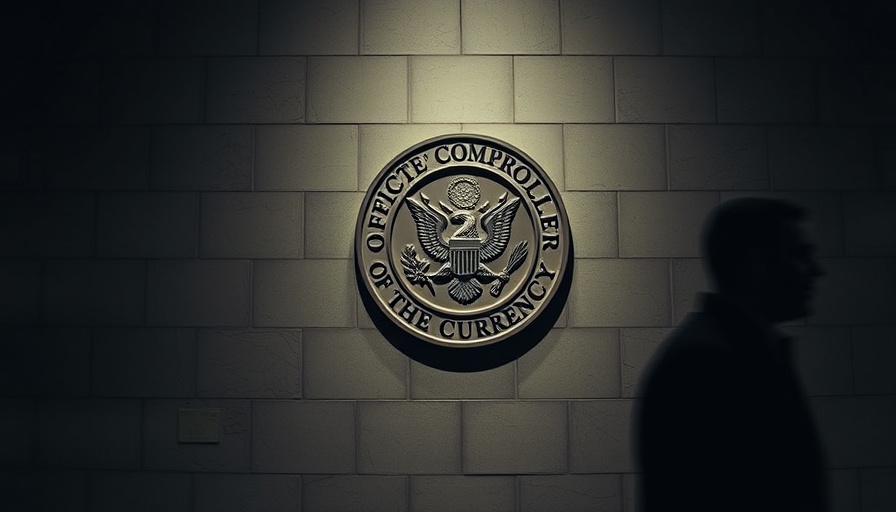
OCC emblem on wall with shadowed figure in foreground.

Understanding the Recent OCC Email Hack: What You Need to Know

The Office of the Comptroller of the Currency (OCC) recently made headlines when it declared that a breach of its email systems in February was a "major incident." This breach exposed sensitive information regarding the financial conditions of federally regulated banks, raising significant concerns about data security and trust in financial institutions.

What Happened?

The OCC, tasked with monitoring national banks, faced the alarming reality of hackers accessing over 150,000 emails from June 2023 until earlier this year. Once the breach was detected on February 11, the OCC acted swiftly, disabling compromised accounts the very next day. Rodney Hood, the Acting Comptroller of the Currency, emphasized the urgency of assessing the incident's full extent and addressing organizational weaknesses that allowed the breach to occur.

The Impact of Cybersecurity Breaches on Financial Institutions

This incident prompts serious reflection on the vulnerabilities of financial systems. Instances of hackers targeting institutions holding sensitive data have been rising globally, illustrating the need for robust cybersecurity strategies. Such breaches not only risk the confidential information of banks but also pose threats to customers’ trust and the overall stability of the financial sector.

Growing Concerns Over Cybersecurity in Finance

Experts in financial security assert that the ramifications of such breaches can extend far beyond immediate data loss. According to recent statistics, approximately 60% of small and medium-sized businesses that experience a data breach go out of business within six months. If such threats are not mitigated, the entire financial ecosystem could feel the ripple effects. As a result, regulatory bodies like the OCC are under increased pressure to revise their cybersecurity policies and practices to safeguard against future attacks.

Looking Forward: Strengthening Data Protection

In response to this breach, the OCC is engaging external cybersecurity experts to perform a thorough review. This process aims to enhance their IT security policies, ensuring that similar incidents do not recur. Financial institutions globally must follow suit by employing stringent cybersecurity measures alongside regular auditing to maintain the integrity of their systems.

Action Points for Individuals and Businesses

The OCC incident serves as a reminder for individuals and businesses alike to remain vigilant about cybersecurity. Here are a few steps you can take:

  • Implement strong passwords and two-factor authentication on all accounts.
  • Regularly update software and security protocols to defend against evolving threats.
  • Educate yourself and your team about the common tactics that hackers use to infiltrate systems.

In a world where data security is paramount, everyone has a role to play in protecting sensitive information. By taking proactive measures and understanding the details behind incidents like the OCC hack, we can contribute to a safer financial environment.

Market Movers

48 Views

Write A Comment

*
*
Related Posts All Posts
01.29.2026

Metalformers Brace for 2026: Increased Confidence Amid Tariff Challenges

Update Metalformers Enter 2026 with Renewed Confidence The latest January 2026 Business Conditions Report from the Precision Metalforming Association (PMA) reveals a notable surge in confidence among metal forming manufacturers. Following a previously challenging year marked by shipping declines, manufacturers are looking forward to what they anticipate will be a more optimistic economic climate. With 26% of respondents forecasting an increase in general economic activity for the upcoming quarter, this marks a clear upward trend from just 14% in November. Understanding the Tariff Impact The growing confidence among metal formers comes against a backdrop of evolving trade dynamics and tariff regulations. Tariffs on imported metals and finished goods have reshaped the landscape, prompting many manufacturers to reassess their strategies. The current focus on agility and responsive production cycles due to these tariffs allows metal formers to capitalize on domestic demand, significantly affecting their outlook for 2026. Statistics that Speak Volumes According to the recent survey, 48% of manufacturers expect an increase in incoming orders over the next three months, a substantial rise from 31% in November. These statistics underscore the resilience that the metal forming industry displayed throughout 2025. Despite lower shipping levels and existing challenges, manufacturers are preparing for growth as they adapt their business models. The Importance of Automation and Flexibility As the industry gears up for 2026, one of the key themes emerging is the balance between automation and flexibility. While full automation is increasingly seen as beneficial in high-volume settings, many mid-market manufacturers are opting for a more flexible approach that allows them to pivot quickly between different production runs. This dual strategy not only mitigates risk posed by tariff-induced demand volatility but also improves operational efficiency. Future Predictions: What to Expect Looking ahead, experts suggest that automation will continue to play a pivotal role in shaping the manufacturing landscape. AI integration into production processes can streamline expenditure and enhance operational efficiency, yet the ability to shift quickly between jobs remains equally valuable. The success of small and mid-sized manufacturers in 2026 may hinge on their readiness to adapt to fast-changing market demands. Building a Supportive Policy Environment PMA's President, David Klotz, emphasizes the need for a stable policy environment to support the positive momentum within the industry. Manufacturers are calling for policy interventions that address these uncertainties and foster domestic manufacturing growth. With advocacy teams actively engaging in Washington D.C., there is hope for a legislative landscape that aligns with the industry’s needs moving forward. Decisions Metalformers Can Make With This Information The data from the January report shouldn't just be seen as numbers; they carry significant implications for strategic planning and investment. Manufacturers are encouraged to assess their operational capacities and market positions in light of these insights. Understanding the direction of customer demands, driven by shifts in tariffs and domestic policies, enables companies to make informed decisions that could enhance their market position. Your Role in this Evolving Industry Environment For those involved in the metal forming industry, recognizing the importance of agility and staying informed about tariff impacts should be a priority. Engaging with available resources, attending industry events, and leveraging surveys can provide critical insights that guide company strategy. It is essential for manufacturers to adapt continuously as they navigate the complexities of 2026 and beyond. As metal forming manufacturers enter 2026, the environment is rife with potential. By understanding the implications of the latest reporting, assessing operational strategies, and maintaining responsiveness, companies can not only weather the storm but thrive in the changing landscape. Stay proactive!

01.21.2026

Metalformers Report Decline in Shipments but Optimism for 2026

Explore the latest insights from metalformers as they report declining shipments, yet anticipate improved economic conditions, highlighting the impact of tariffs and workforce trends.

01.18.2026

Manufacturers Navigate Shifting Economic Conditions: Insights for November 2025

Manufacturers' outlook for economic activity remains steady, despite a dip in shipping levels. Explore detailed insights and trends impacting the metal forming industry.

Terms of Service

Privacy Policy

Core Modal Title

Sorry, no results found

You Might Find These Articles Interesting

T
Please Check Your Email
We Will Be Following Up Shortly
*
*
*