Add Row
Add Element
Global Trade News
update
Global Trade News
update
Add Element
SCHEDULE YOUR INTERVIEW 
  • Home
  • Categories
    • Policy Pulse
    • Compliance Corner
    • Market Movers
    • Trade Trends
    • Export Essentials
    • Import Insights
    • Regulatory Roundup
    • Global Trade News Blog
    • More Spotlights
    • More Videos
  • update
  • update
  • update
  • update
  • update
  • update
  • update
March 31.2025
1 Minute Read

Unlock the Truth: What Is a Trade War?

Have you ever wondered how nations wage 'wars' without a single weapon fired? Enter the intriguing realm of trade wars, where tariffs and policies battle it instead of armies. Let's dive into the mechanisms and implications.

What You'll Learn: Understanding the Trade War Landscape

  • An overview of trade wars and their significance in the global economy

  • Impact of trade wars on international relations and domestic markets

  • Insights into the current conflict between China and the US

  • Expert opinions on the future of trade conflicts and resolutions

Exploring the Concept of a Trade War

Defining a Trade War: A Comprehensive Analysis

A trade war is an economic conflict resulting from extreme protectionism where countries impose tariffs or quotas on imports and retaliate against each other. It disrupts international trade, potentially leading to a decrease in the volume of trade and increased costs for consumers.

Trade wars have far-reaching effects, impacting global markets by increasing the costs of goods, thereby affecting consumer behavior and international relations. For instance, recent US-China tariffs have led to increased prices on products such as solar panels and washing machines, prompting businesses to adapt to new economic realities. For a deeper understanding of how global trade tariffs impact the economy, you can explore The Impact of Global Trade Tariffs on the Economy .

Economic Implications of Trade Wars

The economic implications of trade wars are profound. They can lead to increased consumer prices due to higher tariffs on goods, affecting the cost of living. When the US and China imposed mutual tariffs, the auto and agricultural sectors suffered significant setbacks. Additionally, the uncertainty caused by trade wars can hinder business investment and disrupt global supply chains.

The conflict often trickles down to everyday consumers, who bear the brunt of increased prices and limited product availability, showcasing how trade policies affect even the smallest economic actors. For insights into how trade policies are shaped, consider reading about the 2025 Special 301 Report .

The Conflict Between China and the US: A Case Study

Roots of the US-China Trade Dispute

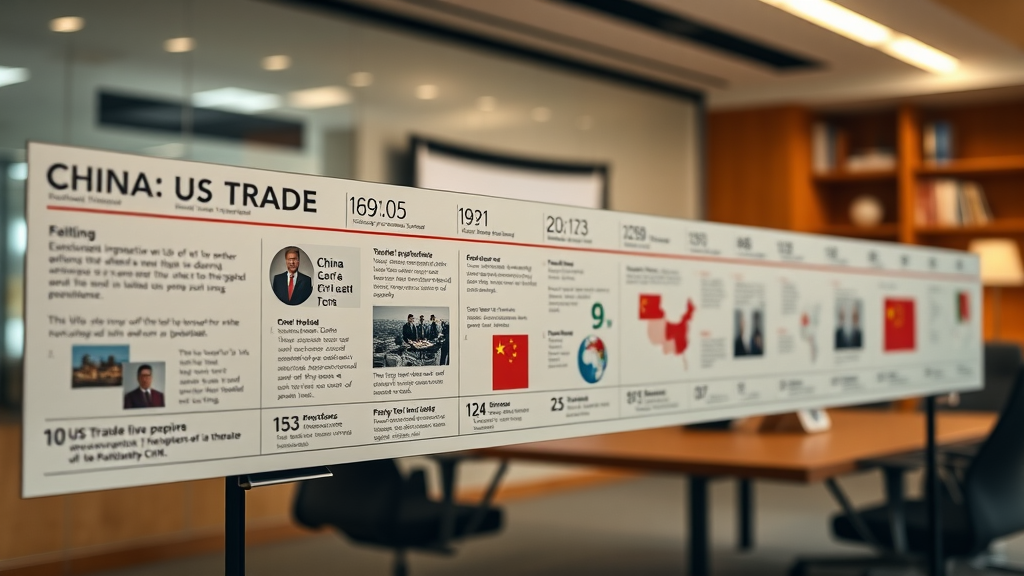
The origins of the US-China trade conflict can be traced back to longstanding trade imbalances and intellectual property theft allegations. As tensions mounted, both nations implemented tariffs affecting billions in goods. Key events, such as the tariffs initiated by President Trump and retaliatory measures from China, highlight the complexities of modern trade disputes. For more on the implications of such policies, see Trump’s Congress Address: What It Means for Import Export Companies .
Tariffs, Tactics, and Trade Negotiations: What Have We Learned?

The trade war has taught us about the intricacies of international trade negotiations, where every tariff imposed results in tactical shifts. For instance, when the US levied tariffs on Chinese solar panels, it spurred innovation and efficiency in domestic production. Conversely, Chinese tariffs on American agricultural products demonstrated the market's volatility, pressuring the global food supply chain.

Impact on Global Markets from the US-China Conflict

The US-China conflict significantly impacts global markets by altering investment flows, stock market dynamics, and trade norms. Fluctuations in market confidence and the re-routing of supply lines exemplify how these disputes echo worldwide, influencing global economic growth narratives.

How Might Trade Hurt a Country in a Time of War?

Economic Vulnerabilities Exposed by Trade Conflicts

Trade wars expose economic vulnerabilities, such as over-reliance on imports or specific trade partners. They can reveal weaknesses in domestic industries, leading to strategic missteps. For example, relying heavily on foreign technology can cripple a nation if cut off during trade conflicts.

Strategic Missteps: Examples from History

Throughout history, trade conflicts have led to strategic blunders. For instance, the 1930s Smoot-Hawley Tariff Act exacerbated the Great Depression by straining US-European economic relations, illustrating the potential pitfalls of protectionist policies.

Decoding Trade in Simple Words

Fundamentals of Trade: What It Implies for Global Economy

Trade involves the exchange of goods and services across borders, underpinning global economic health. It drives innovation, economic growth, and competitive pricing, essential for consumer choice and global market stability.

Importance of Trade Agreements and Alliances

Trade agreements foster international cooperation, reduce tariffs, and enhance market access, fostering economic resilience. Alliances like NAFTA demonstrate how collaborative trade policies can benefit countries by streamlining regulations and promoting regional economic stability.

How Do Wars Affect Trade?

Historical Context and Modern Implications

Historically, wars have disrupted trade routes and altered economic landscapes. Modern conflicts continue this trend, affecting global supply chains and leading to diversified trade strategies.

Adapting to Trade Disruptions

Nations often adapt to trade disruptions by seeking new alliances or developing domestic industries. For instance, the US has shifted focus to alternative suppliers to mitigate dependency on traditional partners affected by ongoing trade tensions.
Expert Insights and Quotes on Trade Wars

“Trade wars do not have winners. They have survivors, with the future hinging on diplomacy and economic resilience.”— John Economist, Global Analyst

FAQs on Trade Wars

  • What are the primary causes of a trade war?

  • Can trade wars be beneficial to any party?

  • How do trade wars influence consumer prices?

Key Takeaways on Trade Wars

  • The complex dynamics of executing a trade war

  • Long-term effects on national and global economies

  • The role of diplomacy in mitigating conflicts

Conclusion: Reflecting on the Trade War Discourse

Summarizing the Impacts and Future Prospects of Trade Wars

The impacts of trade wars underscore the need for diplomatic interventions and strategic realignments. Looking forward, proactive policies and international cooperation remain key to averting prolonged economic discord.

Call to Action: Join the Discussion on Global Trade Policies

Stay informed and involved in the ongoing discussions about global trade policies to help shape a future where economic collaboration thrives over conflict.

Global Trade News Blog

89 Views

Write A Comment

*
*
Please complete the captcha to submit your comment.
Related Posts All Posts
04.18.2026

Unlocking the Future: How Robotics is Transforming Manufacturing

Update The Exciting Future of Robotics in Manufacturing Robotics technology is transforming the manufacturing industry, bringing innovations that not only boost production but also create exciting job opportunities. Imagine factory floors where robots work alongside humans, taking on dangerous or repetitive tasks while freeing people to focus on quality and creativity. Today, we explore this fascinating shift from simulation to physical AI in manufacturing and its impacts on workers and production. Historical Context and Background The journey of robotics in manufacturing began long before today's sophisticated machines were developed. It all started with simple mechanical devices that handled monotonous tasks—tasks that were dull, dirty, or dangerous, the "three Ds" of industrial work. Over the decades, robots have evolved from basic usage to handling complex operations, thanks to advances in artificial intelligence (AI) and machine learning. For example, in 1954, the first patented industrial robot, Unimate, was used by General Motors to aid in die-casting. Fast forward to today, and robotics now boast capabilities like real-time data processing and autonomous operations, allowing for greater precision than ever before. Why is Robotics Valuable in Manufacturing? Robots are not just buzz words in the factory; they offer real benefits. By integrating robots, companies can increase efficiency, save on costs, and enhance workplace safety. Many robots work tirelessly, eliminating human fatigue and maintaining quality over extended periods. For example, in a poll, manufacturers reported that robots improved production safety and reduced costs significantly. Real-World Impacts of Robotics To give a clearer picture, consider how various industries are implementing robotic solutions: Automotive Industry: Robots handle everything from welding to painting, drastically cutting production times. Food and Beverage: Robots sort and package items efficiently, ensuring safety standards are met with minimal human contact. Electronics: Small components are assembled with precision, making robotic arms essential in this fast-paced sector. Future Predictions and Trends in Robotics The outlook for robotics in manufacturing is bright. Experts predict that the adoption of automation will only grow, with ongoing investments leading to more technology integration. As factories embrace Industry 4.0—an era of automated digital transformations—manufacturers will benefit from immediate feedback loops that enhance decision-making. Moreover, with the rise of collaborative robots (or cobots) designed to work alongside humans, the manufacturing workforce will be reshaped. Workers will take on more strategic roles that involve supervising technology and managing data instead of performing menial tasks. This means new jobs will emerge alongside robots, increasing the workforce's overall value. How Can You Prepare for the Change? As manufacturing technology continues to evolve, it is essential for current and future workers to embrace these changes. Engaging in training programs focusing on robotics and automation will be crucial. Understanding how to program and manage these advanced systems will become a premium skill in the workforce. Educational resources, like Goodwin University's Robotics and Automation Training Program, are tailored for those who wish to navigate the new landscape of manufacturing equipped with essential skills. Manufacturers looking to thrive will also need to invest in continuous education for their employees, keeping them updated on the latest technologies. Investing in the Future As manufacturers explore robotics, it's important for them to consider long-term investments in technology. Effective integration of robotics not only cuts down production costs but also positively impacts the environments in which these machines work, making manufacturing more sustainable. Looking ahead, embracing automation will not just be about efficiency; it will also define the competitive edge in the industry. With continued advancements in robotics, we can expect even more creative solutions that bring forth safer, faster, and more efficient manufacturing processes. Robotics offer manufacturers the chance to innovate and transform their production lines, providing exciting opportunities for workers to develop new skills and engage in rewarding work. Are you ready to embrace this technological shift? Conclusion Robotics is not just a passing trend; it’s paving the path for the future of manufacturing. As robots enhance production, the demand for skilled workers will rise. By preparing ourselves for this new age, we will enable growth and innovation in manufacturing, leading to rewarding job opportunities and advancements in technology for all.

04.18.2026

Why Government Support is Vital for U.S. Shipbuilders Right Now

Update Why Evolving Trade Policies Matter for Shipbuilders In recent conversations among U.S. shipbuilders, a critical theme has emerged: the urgent need for government support. As tensions persist in global trade, understanding how these trade policies affect our manufacturing sector is crucial. Without prompt government intervention, our shipbuilding industry—a vital part of our national security and economy—risks becoming less competitive.In 'US Shipbuilders: Why We Need Government Support NOW', the discussion dives into the pressing needs of the shipbuilding industry, prompting a deeper analysis of current trends in tariffs and what they mean for manufacturers. The Current Shipbuilding Scene: Challenges and Opportunities U.S. shipbuilders are facing multiple challenges, resulting from shifting international trade agreements and tariffs. These changes often create a ripple effect that impacts not just shipbuilders but also their suppliers, labor force, and the economy at large. Recently, tariffs have been a hot topic in every industry, and understanding their implications can help manufacturers prepare for potential disruptions. What Are Trends in Tariffs? One current trend is the inconsistency in tariffs, which can change with little warning. Manufacturers need to stay informed about these trends since tariffs can increase costs and hinder international competitiveness. For example, if the cost of materials rises due to tariffs on imports, shipbuilders may have to raise prices, which can deter potential buyers. It's essential for businesses to factor these trade dynamics into their long-term planning. The Importance of Government Support Manufacturers, especially within the shipbuilding sector, call for comprehensive government support to navigate these changes effectively. This includes not just financial grants and subsidies, but also resources such as educational programs to keep workers trained in the latest technologies. There’s a strong belief that government assistance now can lead to a more resilient and innovative industry in the future. The Future of Shipbuilding: Predictions and Insights Looking forward, it’s evident that technological advancements in shipbuilding could play a significant role in how this industry evolves. Automation and artificial intelligence are becoming increasingly vital, as they can enhance efficiency and reduce costs in the long run. However, without government-backed funding and incentive programs, many manufacturers may struggle to adapt to these new technologies, further diminishing their competitiveness on a global scale. Conclusion: What You Can Do For manufacturers and workers in the shipbuilding industry, staying informed is crucial. Begin discussions with colleagues, industry leaders, and local government representatives about the importance of lobbying for government support. Every voice counts, and collective action can lead to meaningful change. Understanding and advocating for our industry allows us to stand united against challenges and seize new opportunities as they arise.

04.17.2026

Revolutionizing Manufacturing: How Digital Tools and Vision Systems Enhance Production

Update Unlocking the Future: Digital Tools and Vision Systems in Manufacturing In the world of manufacturing, digital tools and vision systems are making waves by transforming how companies approach automation. As the industry evolves, these technologies are not just buzzwords but essential components driving productivity and efficiency in production lines. With their ability to enhance automation, they hold the key to overcoming various manufacturing challenges. The Role of Vision Systems in Automation Vision systems use advanced algorithms and cameras to help machines recognize and understand what they see. This technology empowers robots to perform tasks like picking and placing parts, welding, and even quality inspections. For example, with systems like KEYENCE's 3D vision-guided robot, the machines can identify parts regardless of their orientation, significantly improving their functionality and reducing setup times. Imagine a factory floor bustling with robotic arms swiftly handling products with precision. These automated systems, equipped with machine vision technology, increase production rates while minimizing human errors, leading to a smoother production flow. The outcome? Products that not only meet quality standards but also keep costs manageable. Enhancing Reliability with Predictive Maintenance One of the most beneficial aspects of these digital tools is predictive maintenance. Using sensors that gather crucial data on machine health, companies can foresee when a machine might fail. For instance, the QM30VT3 sensor by Banner Engineering monitors vibration and temperature, predicting maintenance needs before costly failures occur. This level of insight allows manufacturers to reduce downtime and keep production levels high. Cloud Solutions: Simplifying and Accelerating Processes Modern challenges require modern solutions, and cloud-based systems like Cognex’s OneVision are leading the charge. By centralizing all configuration and setup efforts, manufacturers can speed up the process of implementing new machine vision applications from months to just minutes. This enables more companies to harness the power of AI and machine learning in their operations without the need for extensive hardware. Why Invest in Digital Technologies? Investing in these digital technologies may seem daunting, but the benefits are palpable. Manufacturers that adopt advanced automation technologies often see a significant uplift in production quality and efficiency. For instance, digital tools help streamline operations, allowing companies to adapt to changes in demand quickly and respond to market fluctuations. Moreover, the ongoing global changes in trade policies and tariffs highlight the need for efficiencies in manufacturing. Companies must pivot and adapt to maintain a competitive edge, making these technologies not just beneficial but essential. Final Thoughts: Embracing the Future For today’s manufacturers, embracing digital tools and vision systems isn’t merely an option; it’s a necessity. As these technologies continue to evolve, they promise to reshape manufacturing by offering unparalleled efficiency, improved quality, and cost savings. Companies willing to invest in these advancements position themselves not just to survive but thrive in a competitive landscape. As manufacturing technology progresses, staying informed and adaptable is key. Explore how these innovations can support your production efforts, and consider integrating these visionary tools into your workflow. The future of manufacturing is exciting, and now is the time to be a part of it.

Terms of Service

Privacy Policy

Core Modal Title

Sorry, no results found

You Might Find These Articles Interesting

T
Please Check Your Email
We Will Be Following Up Shortly
*
*
*