 Add Row
  Add
Add 









Did you know that a 25% blanket tariff on critical minerals or metals can reroute billions of dollars in global energy investment and disrupt everything from electric vehicles to national defense? Mineral tariffs are at the center of a worldwide debate on how nations can secure vital resources and drive innovation in the clean energy era.

How Mineral Tariffs Shape Supply Chains and National Security
Mineral tariffs have become one of the most important levers in managing the global mineral supply chains, shaping everything from pricing to the very availability of critical minerals required for high-tech manufacturing and clean energy. These trade policies are quickly evolving due to international tensions, market volatility, and rising recognition of resource dependency. When countries impose tariffs on rare earths, lithium, or cobalt, the ripple effects cascade across industries: prices spike, production slows, and entire supply chains scramble to adapt.
A prime example: when the United States implemented tariffs on a variety of minerals and rare earth metals in recent years, companies reliant on imported materials had to rapidly diversify suppliers and, in some cases, move operations domestically. This frantic reshuffling affects not just business leaders but also consumers, as shortages or price jumps make their way into everything from smartphones to electric vehicles. For governments, aligning mineral tariff policy with national security objectives has become non-negotiable, as critical mineral supply chains now underpin both economic resilience and defense readiness.
A Startling Fact: The Global Mineral Tariff Surge and Its Ripple Effects
Over the past decade, more than a dozen countries have increased tariffs, duties, or implemented reciprocal tariff strategies on minerals, creating widespread uncertainty. For example, the rare earth value chain experienced an average 17% increase in transit time and a surge in costs after major tariff actions in 2018 and 2019. These disruptions aren’t confined to one region; mineral supply chains now span continents, and a single policy change in Beijing or Washington can have outsize effects on critical mineral supply everywhere.
Beyond just costs, the implications are strategic. Blanket tariffs have led mining companies to seek friendlier jurisdictions, while governments accelerate plans for domestic mining and processing. These collective responses stress the system further but also open doors for innovation and new trade relationships as nations look to secure rare earths and other crucial resources.

The Critical Mineral Tariff Debate: An Informed Opinion
There’s no consensus on whether blanket tariffs truly protect or jeopardize critical mineral supply chains. Proponents argue tariffs shield domestic industries and reduce dependency on foreign minerals, especially from strategic competitors. They contend strong tariffs incentivize companies to develop local mineral supply and invest in clean energy technologies at home.
On the other side, critics warn that tariffs can backfire by making minerals—and the products they enable—more expensive, stoking inflation while exposing domestic supply to retaliation or trade wars. The effectiveness of any mineral tariff strategy depends on context, timing, and careful balancing of industrial policy goals, market conditions, and geopolitical realities.
Do Blanket Tariffs Strengthen or Weaken Critical Mineral Supply Chains?
The effect of blanket tariffs on critical mineral supply chains is deeply nuanced. In practice, tariffs can drive early investment in domestic mining and processing, adding capacity and creating jobs. However, blanket tariffs may also disrupt access to specialty minerals—especially where local extraction is undeveloped or cost-prohibitive. For instance, the United States remains heavily reliant on imports for several rare earths vital to defense and electronics, and sweeping tariffs risk squeezing manufacturers who can’t quickly source alternatives.
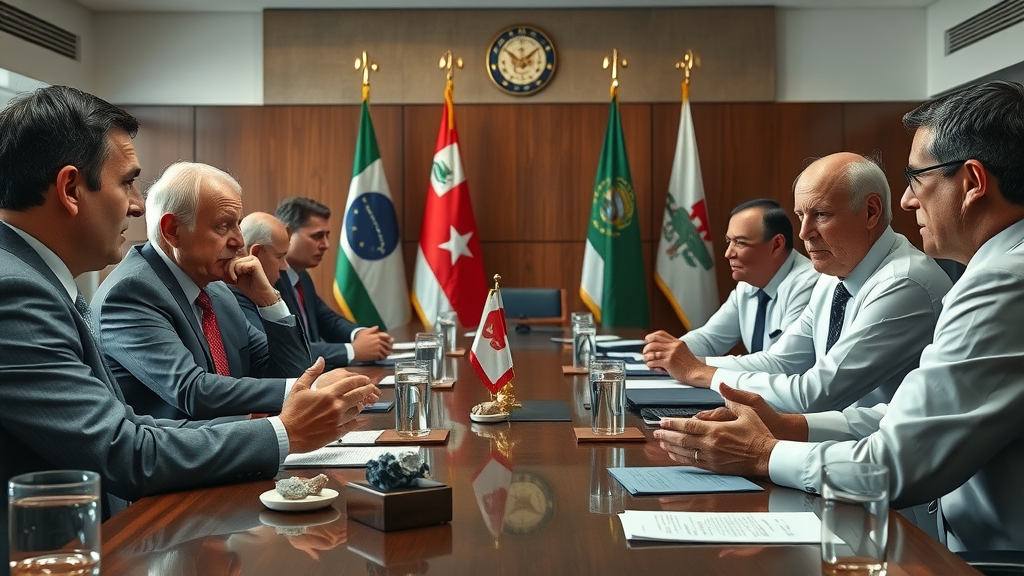
Policies that are too broad risk creating bottlenecks in the supply chain , undermining the goal of resilience by unintentionally increasing vulnerability to shortages or market shocks. Instead, a targeted, flexible approach—differentiating between critical minerals, reciprocal tariffs, and leveraging strategic trade partnerships—appears more likely to reinforce supply chain security over the long term.
Impact of Mineral Tariff Policies on Clean Energy and Domestic Supply
The intersection of mineral tariff decisions with clean energy goals is impossible to ignore. Modern solar panels, electric vehicles, and energy storage batteries depend on a handful of minerals, such as lithium, nickel, and cobalt—all subject to evolving tariff regimes. When tariffs raise the cost or limit the availability of these minerals, clean energy projects slow, jeopardizing emission targets and market adoption.
Meanwhile, domestic supply initiatives have gained traction in the wake of tariff-driven market volatility. Public incentives for mining and processing, combined with tariffs on imported minerals, have encouraged new investments from both startups and established players. However, balancing environmental, economic, and social concerns remains challenging, as ramping up domestic mining can face local opposition and regulatory hurdles.
How Mineral Tariff Decisions Influence the Clean Energy Transition
Tariffs intended to secure supply may inadvertently delay the shift to renewables. For example, tariffs on imported solar-grade polysilicon and battery metals can inflate project costs or slow deployment. Clean tech manufacturers must then adjust their strategies—either absorbing higher prices, passing costs to consumers, or investing in new technologies to reduce mineral dependency.
Effective mineral tariff policies need to strike a sensitive balance: ensuring reliable access to inputs for clean energy technologies while enabling innovation in alternative materials. Countries able to navigate this tightrope are likely to emerge as leaders in both mineral supply and clean energy market share.
Mineral Tariff and Domestic Supply: Risks and Rewards
Developing a robust domestic supply of critical minerals reduces reliance on volatile international markets and supports job creation. Tariffs, when intelligently deployed, send a strong signal to investors and innovators that local production is valued. Yet, these gains must be weighed against potential risks of retaliatory tariffs abroad and the economic and environmental costs of rapid domestic mining expansion.
Ultimately, the rewards include greater control over the full mineral supply chain, enhanced national security, and the opportunity to drive sustainable practices at home. The risks, meanwhile, center on short-term supply shocks and the challenge of scaling responsible mining and processing fast enough to meet booming clean energy and tech demands.

Global Supply Chains Disrupted: The Role of Mineral Tariff in Mineral Supply
Global mineral supply chains are under unprecedented strain as governments recalibrate tariffs to maintain leverage and stability. Export controls, reciprocal tariffs, and new trade barriers have redrawn the map for sourcing rare earths, critical minerals, and strategic ores. No longer is mineral supply simply a function of geology—it’s a high-stakes game of diplomacy and market anticipation.
The scramble for minerals is particularly apparent in electric vehicle and renewable energy sectors, where disruptions can slow delivery schedules and increase costs. As each country adapts its mineral tariff policy, manufacturers must rethink sourcing strategies and hedge against both political and economic risk.
Recent Mineral Tariff Actions: The Case of President Donald Trump
The Trump administration fundamentally altered the landscape of mineral supply chains when President Donald Trump imposed sweeping tariffs on steel, aluminum, and eventually a spectrum of rare earths and critical minerals. The rationale was clear—reduce dependency, promote domestic mining and processing, and secure materials for national security. Tariffs of up to 25% on steel sent shock waves through both the United States and its trading partners, leading to a cascade of reciprocal tariff actions globally.
These strategies set the template for future policy moves, linking tariffs not just to economic goals but to broader security and clean energy objectives. The aftereffects are still being felt today: companies scrambled to rebuild mineral supply networks, often at higher cost and greater complexity than had previously existed.
China’s Critical Minerals Leverage and US Supply Chain Resilience
China’s dominance in mining and processing critical minerals—controlling over 60% of rare earth production—gives it significant leverage in trade negotiations. When China restricted certain exports in response to rising tensions with the US, the vulnerabilities in American supply chains became glaringly apparent. This further highlighted the importance of responsive mineral tariff policies.
In response, the US and its allies moved to fortify critical mineral supply chains through diversification, new trade alliances, and incentives for domestic mining. These moves reinforced the message: resilience in supply chain security is now a pillar of national defense and innovation policy.
Key Takeaways on Critical Mineral Tariff Policy
| Country | Tariff Rate (%) | Year Imposed | Targeted Minerals | Primary Objective |
|---|---|---|---|---|
| United States | 10-25 | 2018-2024 | Steel, Aluminum, Rare Earths | National Security, Domestic Supply |
| China | 15-40 | 2019-2023 | Rare Earths, Lithium, Cobalt | Market Leverage, Supply Chain Control |
| EU | 5-18 | 2022-2024 | Nickel, Lithium | Supply Diversification |
“An agile, responsive mineral tariff policy is essential—one that adapts to shifting global alliances and secures our critical mineral supply chains, ensuring technology, security, and energy goals are not derailed by market disruption.”
– Senior Critical Minerals Strategist
Common Questions About Mineral Tariff and Critical Minerals
-
FAQ: What is the current tariff rate in the US?
Answer: The mineral tariff rate fluctuates based on trade agreements, geopolitical tensions, and commodity classifications. As of mid-2024, certain critical minerals face tariffs ranging from 10% to 25%, but rates are subject to rapid change. -
FAQ: Did Trump put a tariff on steel?
Answer: Yes, President Donald Trump implemented a 25% tariff on steel imports to protect domestic supply chains and support national security interests, which set a precedent for subsequent mineral tariffs. -
FAQ: Did China cut off US access to rare minerals?
Answer: China has restricted certain rare mineral exports to the US, underscoring vulnerabilities in mineral supply chains and amplifying the conversation around mineral tariff policy and critical mineral independence. -
FAQ: What are the 4 types of tariffs?
Answer: The four main types of tariffs are ad valorem tariffs, specific tariffs, compound tariffs, and blanket tariffs—each affecting critical mineral supply differently.
Top 5 Policy Actions to Strengthen Mineral Supply Chains
- Expand domestic critical mineral extraction
- Diversify international mineral supply chains
- Incentivize clean energy technologies using domestic resources
- Modernize mineral supply logistics infrastructure
- Build strategic mineral reserves for national security
‘Our critical mineral supply chain resilience is the bedrock of the clean energy future.’ – Clean Energy Policy Analyst
How Mineral Tariff Policy Affects National Security and the Clean Energy Future
A strong, predictable mineral tariff policy is about more than economics—it's fundamental to safeguarding national security and accelerating the move toward clean, domestically-sourced energy. Disruptions to critical mineral supply chains can delay or derail essential defense projects, hinder technological competitiveness, and slow the transition to renewables. Every gap in the mineral supply network is a potential vulnerability.
Thoughtful policies, driven by deep collaboration between government and industry, can future-proof these essential supply chains. That means strategic reserves, agile trade agreements, and a transparent, adaptable tariff regime for critical minerals .
Why National Security Hinges on a Stable Critical Mineral Supply Chain
National security in the 21st century is tightly woven with resource security. Modern defense systems—precision missiles, secure communication, advanced sensors—require rare earths and specialty metals. Any choke point in the critical mineral supply chain puts readiness at risk. The U.S., for example, invests heavily to build redundancy into the supply chain so that no single disruption—whether geopolitical or natural disaster—can cripple its tech or defense sectors.
Diversifying mineral sourcing, stockpiling rare earths, and aligning tariff strategies with allies have become standard operating procedures. These steps are key to minimizing chain security threats and maintaining a technological edge in an uncertain world.

The Essential Connection Between Mineral Tariffs and Clean Energy Expansion
The global clean energy race hinges on uninterrupted access to critical minerals. Solar panels, wind turbines, and electric vehicle batteries contain a complex web of resource requirements—from lithium to nickel to rare earth metals. When tariffs lack strategic focus, project timelines and budgets are disrupted, threatening emission reduction commitments.
Forward-thinking mineral tariff policy enables faster deployment and adoption of renewables. Empowering domestic innovation and fostering global supply chain partnerships will be paramount in the next decade to keep pace with clean energy targets and changing marketplace needs.
Summary of Critical Mineral Tariff Trends and Executive Insights
Unpacking the Next Phase in Mineral Tariff and Supply Chain Policy
As critical mineral markets face continuing uncertainty, executives and policymakers are recalibrating strategies for the next phase. The focus will shift toward more granular targeting of tariffs based on resource scarcity, reciprocal trade relationships, and alignment with climate policy objectives.
Flexible, data-driven tariff regimes—combined with substantial investments in both domestic mining and international partnerships—could define the next generation of resilient mineral supply chains. To maintain leadership in both clean energy and national security , nations will need both vigilance and creativity in their approaches to mineral tariff strategy.
Join the Conversation on Global Mineral Tariff Policy and Critical Mineral Supply Chains
Have insights to share on global trade? Let's talk—call us at 203-271-7991 to explore contributing an article.
What You'll Learn in This Mineral Tariff Guide
- The real-time impact of mineral tariff changes on global and domestic supply chains
- The intersection of mineral tariffs, clean energy policy, and national security
- Key strategies to mitigate mineral supply disruptions
- Answers to the most urgent questions about tariffs and critical minerals
To future-proof your operations, prioritize monitoring tariffs, diversify supply sources, invest in domestic innovation, and engage in the evolving mineral tariff policy debate.
Understanding the complexities of mineral tariffs is crucial for grasping their impact on global supply chains and national security. The article “Trump orders tariff probe on all US critical mineral imports” provides an in-depth analysis of the U.S. administration’s investigation into potential tariffs on critical mineral imports, highlighting concerns over reliance on foreign sources and the implications for domestic industries. ( reuters.com ) Additionally, “China expands key mineral export controls after US imposes tariffs” examines China’s response to U.S. tariffs by tightening export controls on essential metals, underscoring the strategic maneuvering in global mineral trade. ( reuters.com ) For a comprehensive understanding of how these policies influence supply chains and national security, these resources offer valuable insights.


Write A Comment