 Add Row
  Add
Add 









Hook: Did you know that by 2025, over 20% of global electronics manufacturing could shift back to the United States, upending traditional supply chains and forcing companies to rethink where and how their products are made? This isn’t just a simple trend—it’s a movement with the power to reshape not only your business, but the entire global electronics supply chain. If you’re searching for a way to future-proof your operations, reshoring electronics might be the critical pivot you need to make.
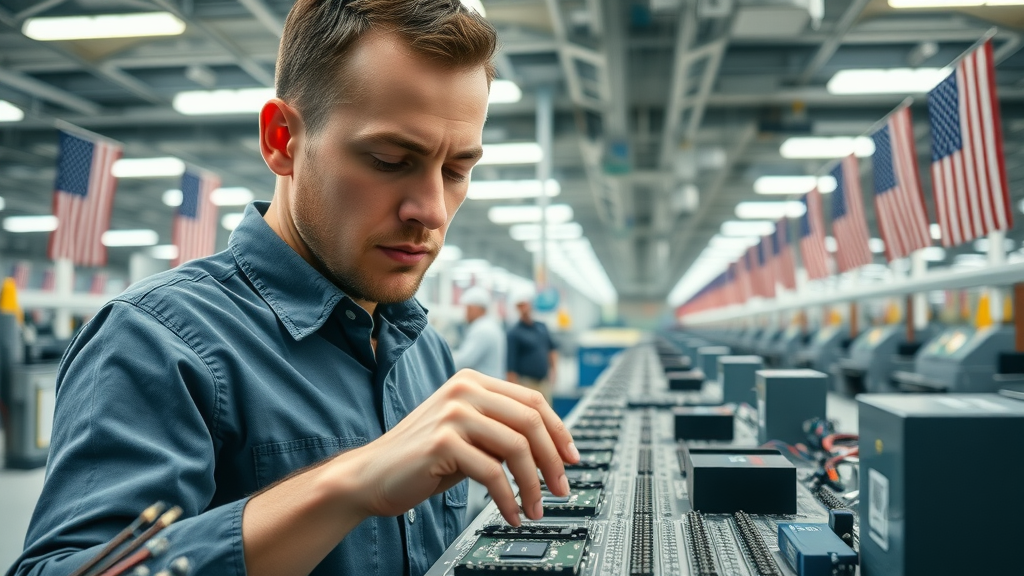
A Startling Reality: Reshoring Electronics in 2024
Reshoring electronics isn’t just a buzzword in 2024—it represents a fundamental shift for manufacturers, decision-makers, and supply chain strategists in the United States. As global supply chains are tested by labor costs, geopolitical tension, and the lingering effects of previous disruptions, businesses are questioning long-standing practices of offshore production. For many, the reliability of electronics supply chains is non-negotiable. Every supply chain disruption in the global electronics market—whether a chip shortage, port congestion, or regulatory bottleneck—directly impacts electronics production capabilities and product quality.
The reality is clear: manufacturers bringing production closer to home are doing more than just chasing headlines. They’re responding to tangible risks and opportunities. Not only does reshoring electronics promise shorter lead times and improved quality control, it also gives American manufacturers more leverage over their supply chain. But it doesn’t stop there: domestic manufacturing in the United States also means higher regulatory standards, potential job growth, and enhanced intellectual property protection—made ever more critical in the face of global competition.
"By 2025, experts predict over 20% of global electronics manufacturing could be reshored to the United States—a paradigm shift that redefines the electronics supply chain."
What You'll Learn About Reshoring Electronics
Why reshoring electronics is capturing business headlines in 2024
How reshoring impacts electronics supply chain resilience
The role of quality control in reshoring electronics manufacturing
Real-world examples of successful electronics production shifts
Major challenges and disadvantages you must consider
Actionable strategies for manufacturers in the United States
Reshoring Electronics: Defining the Trend for Modern Supply Chains
Why Reshoring Electronics Has Gained Momentum in the United States
Inquiry into reshoring electronics is often fueled by one question: why now? Until recently, offshoring electronics production was considered the norm, primarily due to lower labor costs and access to expansive manufacturing ecosystems in Asia. However, over the last several years, persistent global supply chain issues—ranging from pandemics to trade disputes and rising transportation costs—have exposed the vulnerability of relying on offshore production. Companies in the United States are discovering that the quest for cost savings can be undermined by supply chain disruptions, longer lead times, and uncontrolled quality assurance processes.
But the tide is shifting. Competition for resilient supply chains has never been fiercer. As businesses seek greater predictability and reduced risk, reshoring electronics manufacturing has become the strategic move. Access to skilled U.S. labor, technological innovation in automation, and increasing government support all bolster the case for bringing production closer to home. Companies now recognize that proximity equals agility: a domestic supply chain can pivot more rapidly to market changes and maintain higher production standards.

Reshoring Electronics vs. Offshoring: Key Differences in Electronics Manufacturing
Understanding the difference between reshoring electronics and traditional offshoring is crucial to making the right business decision. In offshoring models, organizations typically seek out regions with lower labor and production costs, but accept the tradeoff of longer supply chains, less immediate quality control, and vulnerability to global risks. On the flip side, reshoring brings electronics production closer—physically and operationally—mitigating many of the logistical and regulatory challenges associated with a global supply chain.
Reshoring enables real-time oversight, facilitates faster issue resolution, and significantly enhances quality assurance throughout the production process. This trend is not merely about cost; it’s about building robust supply chains that can withstand shocks and support world-class product quality. As global competition intensifies and consumer expectations rise, businesses must reevaluate not just where electronics are made, but how and why their supply chains are structured.
Electronics Manufacturing and the Impact on the Supply Chain
How Reshoring Electronics Transforms the Electronics Supply Chain
The impact of reshoring electronics on the supply chain is profound. By bringing electronics production closer to the United States, companies can compress lead times, improve responsiveness to market dynamics, and exert greater control over product quality. This centralization of key supply chain activities doesn’t just minimize transportation and customs risks—it also strengthens supplier relationships and fosters collaboration within the domestic manufacturing ecosystem.
Supply chain resilience is further reinforced as companies diversify away from singular dependencies on overseas suppliers. With reshoring, businesses are better equipped to handle demand spikes, regulatory changes, and potential chain disruptions. In a world where even a minor delay can impact the entire electronics supply, the ability to react quickly is invaluable. That’s why more electronics manufacturers are viewing reshoring as a crucial lever for ensuring uninterrupted operations and reliable product delivery.
Challenges for Global Electronics Supply Chains in 2025
Looking ahead to 2025, global electronics supply chains face a host of formidable challenges: increased trade barriers, volatile raw material costs, ongoing pandemic recovery, and skills shortages. The relentless push for innovation in electronics puts pressure on suppliers to deliver high-quality components even faster—an area where traditional offshore models may fall short due to distance and communication lags. As supply chain disruptions remain a threat, companies are forced to weigh the risks of extended lead times versus the upfront expense of reshoring.
The challenge for manufacturers will be in balancing cost competitiveness with the need for agility and resilience. Labor costs in the United States are higher, but offset by reduced shipping risks, less inventory buffering, and faster new product introductions. Supply chain leaders are therefore under mounting pressure to create a reshoring strategy that preserves margins while capitalizing on the operational and quality gains unique to the domestic landscape.
Comparison of Reshoring Electronics vs. Offshoring |
||
Factor |
Reshoring (United States) |
Offshoring (Asia & Abroad) |
|---|---|---|
Supply Chain Costs |
Higher labor costs; Lower shipping/import costs |
Lower labor costs; Higher shipping/import costs |
Lead Times |
Much shorter, highly responsive |
Longer, susceptible to delays |
Quality Control |
Direct oversight; rapid issue resolution |
Remote oversight; delayed corrective action |
Regulatory Compliance |
Stricter, enforced U.S. standards |
Varies; may be less rigorous |
Quality Control: Why It's Central in Reshoring Electronics Manufacturing
Ensuring Electronics Production Standards with Reshoring
In the arena of electronics manufacturing, quality control is more than a best practice—it’s a necessity. As companies bring electronics production closer to home, their ability to enforce rigorous standards strengthens substantially. In U.S.-based facilities, real-time inspection and testing are possible at every stage of the production line, enabling a tight grip on everything from material input to finished product. This kind of oversight is infinitely more challenging with overseas operations, where cultural and regulatory differences can hinder quick action.
More manufacturers are seeking not just compliance with regulations but true product quality superiority—a goal more easily achieved by reshoring. Close collaboration between engineers, quality assurance teams, and production staff enables rapid diagnosis and defect reduction. Ultimately, reshoring empowers manufacturers to deliver electronics that meet the highest market and safety standards, aligning with growing consumer expectations and stricter government requirements.

Reducing Defects and Meeting Regulations in Electronics Supply
Reducing defects and ensuring regulatory compliance are two of the most persuasive arguments for reshoring electronics manufacturing. By overseeing every step of the electronics supply chain within the United States, manufacturers gain unprecedented control over product testing, traceability, and continuous improvement. Not only does this decrease the risk of costly recalls, but it also enhances brand reputation and consumer trust.
Furthermore, U.S. regulations governing electronics are often more comprehensive than those found in global supply chains. Domestic companies, therefore, are better positioned to design for safety, sustainability, and privacy. The direct relationship between reshoring and stringent quality control translates into fewer defects, faster compliance certifications, and smoother market launches for innovative electronics.
"Quality control isn’t just a compliance box—it’s the reason many manufacturers are bringing electronics production back home."
Opportunities: How United States Manufacturers Benefit From Reshoring Electronics
Increased job creation
Enhanced intellectual property protection
Shorter supply chains
Improved supply chain resilience
Better quality control
For manufacturers in the United States, reshoring electronics isn't just a logistical shift—it's a transformational opportunity for the broader manufacturing ecosystem. By rebuilding local supply chains, American businesses can foster skilled labor markets, secure sensitive intellectual property, and establish deeper partnerships across the value chain. These advantages collectively result in greater supply chain resilience and competitive differentiation in the global electronics industry.
Stronger quality control and direct access to product quality assurance procedures allow companies to innovate confidently and rapidly adapt to evolving market requirements. In an era defined by unpredictability, embracing these reshoring benefits equips manufacturers to thrive amidst both domestic and global disruptions.

Disadvantages: The Hidden Costs of Reshoring Electronics
Investment in new facilities and equipment
Higher labor costs in the United States
Talent shortages in advanced manufacturing
Integration challenges for existing electronics supply chains
As promising as reshoring electronics may seem, it carries notable disadvantages. The initial investment for new factories, equipment, and process upgrades can be daunting. American labor costs are significantly higher compared to traditional offshore locations, eating into profit margins unless offset by automation or premium market strategies. The country also faces a persistent shortage of skilled workers familiar with advanced manufacturing and the unique processes of the electronics industry.
Integrating reshored operations into complex, globally-distributed electronics supply chains is no small feat. It often demands considerable time, resources, and reengineering of existing workflows and supplier relationships. Manufacturers must carefully assess whether the long-term advantages of supply chain resilience, quality control, and regulatory alignment outweigh the immediate financial and operational hurdles.
Case Studies: Real-World Examples of Reshoring Electronics
Case 1: A leading electronics manufacturing services (EMS) provider moves a core segment of its production line from Asia back to the United States. The result: faster prototype delivery, a 30% drop in defects thanks to tighter quality control, and significant reductions in supply chain disruptions.
Case 2: An iconic consumer electronics brand pioneers a "local-first" sourcing strategy. By building key supply components in American facilities, the company accelerates product launches and enhances its reputation for product quality—all while ensuring greater compliance with U.S. regulations.
These stories underscore the tangible benefits of reshoring electronics: significant improvements in quality assurance, lead times, and supply chain resilience, with results that echo across the industry.
People Also Ask: Is Reshoring Electronics Happening in the US?
Yes, reshoring electronics is gaining real traction in the United States as companies wake up to the vulnerabilities of extended supply chains and offshoring. Many electronics manufacturers are accelerating plans to bring production back home, spurred by both government incentives and market demands for greater quality, shorter lead times, and economic security.
People Also Ask: What Will Happen to Electronics in 2025?
By 2025, expect to see a pronounced shift in global electronics manufacturing strategy. The United States will likely capture a larger share of electronics production, strengthening domestic supply chains and reducing reliance on overseas suppliers. Supply chain leaders should anticipate stricter regulations, increased investment in automation, and intensified competition based on both cost and quality.
People Also Ask: What Are the Disadvantages of Reshoring Electronics?
While the benefits of reshoring electronics are compelling, disadvantages include significant upfront investments, higher U.S. labor costs, a shortage of skilled manufacturing talent, and the need to overhaul or integrate new systems with existing global supply chains. Businesses must weigh these factors against the operational and brand advantages of operating production lines closer to home.
People Also Ask: What Is an Example of Reshoring Electronics?
A prime example of reshoring electronics is when a major EMS provider relocates its printed circuit board assembly from Asia to U.S.-based facilities. By doing so, the company gains improved quality control, reduces transportation risk, and more quickly adapts to customer needs, highlighting the competitive potential of domestic manufacturing.
Is Reshoring Electronics the Right Move? Weighing Opportunities and Challenges
Opportunities vs. Disadvantages for US Electronics Manufacturers |
||
Category |
Opportunities |
Disadvantages |
|---|---|---|
Job Growth |
New manufacturing jobs, local economic boost |
May require reskilling/upskilling workforce |
Supply Chain Risks |
Shorter chains, less susceptible to global disruptions |
Potential local supply bottlenecks |
Cost Comparisons |
Lower shipping, strong quality saves rework costs |
Higher labor and facility costs |
Regulatory Benefits |
Easier compliance, supports sustainability |
Requires adaptation to evolving U.S. standards |
Actionable Strategies for Transitioning to Reshoring Electronics
Assess current electronics supply chain risks
Build partnerships with local electronics manufacturing services
Invest in workforce development and automation
Leverage government incentives
Striking the right balance when reshoring electronics starts with a comprehensive supply chain risk analysis. Collaboration with domestic partners creates stronger alignment and resilience throughout the production process. Consider targeted investments in automation to address labor shortages and maximize productivity. Don’t overlook the value of government incentives, which can significantly reduce the financial barriers to entering or expanding U.S.-based electronics manufacturing.
Proactive companies already pursuing these strategies are experiencing tangible improvements in quality control and future-proofing against both local and global disruptions. Start your reshoring journey with a clear roadmap, leveraging expert partners and evolving regulatory frameworks for a confident transition.
Watch:
A step-by-step, visual guide to transitioning your electronics supply chain from offshore to U.S.-based production. Learn how quality control, job creation, and improved supply chain resilience make reshoring a compelling strategy.
FAQs on Reshoring Electronics
How long does a reshoring electronics project typically take?
Depending on facility readiness, workforce availability, and supply chain complexity, a reshoring project may range from 12 months for small operations to 2-3 years for larger, intricate electronics production lines.Are there government incentives for reshoring electronics production in the US?
Yes, several federal and state programs currently offer tax credits, grants, and training subsidies to support reshoring initiatives, particularly in high-tech and advanced manufacturing sectors.What industries are leading in reshoring electronics?
The automotive, aerospace, defense, and consumer electronics industries are spearheading the reshoring movement, capitalizing on domestic supply chain resilience and advanced quality control capabilities.
Key Takeaways: Reshoring Electronics—A Defining Decision for American Manufacturing
Reshoring electronics offers both transformative benefits and significant challenges
Quality control and supply chain resilience are winning arguments
Manufacturers must prepare for increased costs and embrace innovation

Conclusion: Shaping the Future with Reshoring Electronics
The decision to reshore electronics is a bold step toward supply chain resilience, quality control, and a robust American manufacturing future.
Manufacturer Don't Miss Out! Stay Informed on Reshoring Electronics and Global Trade Shifts
Manufacturer don't miss out! Stay informed on global trade shifts—tariffs, reshoring, and supply chain updates could reshape your strategy. Subscribe to Global Trade News for the latest updates. Call 203-271-7991 today.



Write A Comment