








Did you realize that international trade tariffs cost global businesses over $400 billion every year in lost trade? This staggering figure challenges conventional wisdom about protectionism and shows that the true impact of international trade tariffs extends far beyond headline numbers. In this article, you'll discover the often-overlooked hidden costs of tariffs—costs that ripple through the global economy, transform supply chains, and hit everyday consumers in ways few expect. By peeling back the layers, we’ll challenge common beliefs, highlight critical examples, and invite you to view global trade in a whole new light.
A Startling Look at International Trade Tariffs and Their Real Impact
- Did you know that international trade tariffs cost global businesses over $400 billion annually in lost trade? This article uncovers the hidden costs of international trade tariffs, challenging common narratives and exploring their far-reaching consequences.
International trade tariffs are often framed as economic shields—mechanisms that protect domestic industries from foreign competition and purportedly create jobs. However, beneath the surface, these policies quietly siphon hundreds of billions of dollars from global commerce, disrupt established supply chains , and fuel unpredictable trade wars . Prices on imported goods rise, businesses scramble to stay competitive, and international relations grow increasingly tense. Companies from technology to agriculture face shifting tariff rates, causing uncertainty and changing how goods move across borders. The full effect of these measures often goes unnoticed by consumers, policymakers, and even seasoned business owners. As we dig into the hidden reality of international trade tariffs , the wide-reaching ripple effects will become clear.
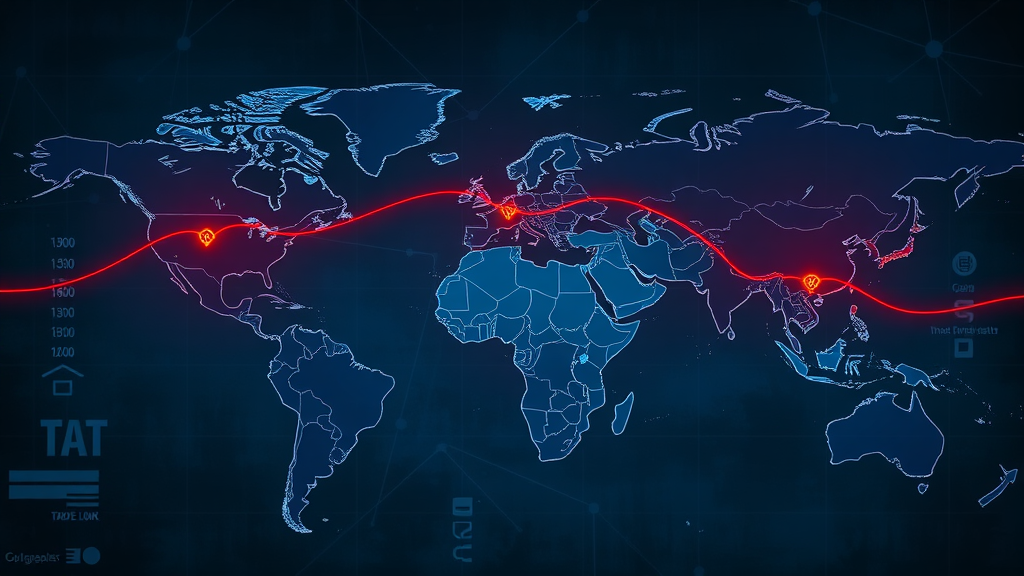
How International Trade Tariffs Affect the United States and Its Trading Partners
From United States Policy to Global Trade: The Ripple Effect
- Examine recent trade policies spearheaded by the United States and their impact on trading partners worldwide.
United States trade policy has long set the tone for the global trade environment. When the U.S. chooses to impose tariffs—whether in response to perceived unfair competition or as a bargaining chip in a new trade agreement —the effects cascade across multiple continents. The most recent high-profile examples include the trade war initiated during the Trump administration , which sent shockwaves through both American industries and their trading partners. American manufacturers found themselves facing increased costs for imported raw materials, while retaliatory tariff rates from countries like China and the European Union targeted U.S. exports such as soybeans, automobiles, and electronics. This domino effect destabilized established supply chains , leading to delayed shipments, altered sourcing strategies, and unforeseen business expenses.
Trading partners reacted quickly to shifts in U.S. trade policy , leveraging their own economic powers to respond with retaliatory tariffs . For example, the European Union imposed its own tariffs on U.S. whiskey and motorcycles, while China targeted agricultural orders. By raising costs across the board, these policy changes did not just spark headlines—they fundamentally altered the flow of global trade . While some domestic industries found momentary protection, many others struggled with new barriers, shrinking markets, and increased uncertainty. The overall result: a global trade landscape more fractured and less predictable than before.

Trading Partners and the Domino Effect of Tariffs
- Explore case studies showcasing how trading partners like China, the European Union, and Mexico have been affected by shifts in tariff rates and trade agreements.
When tariff rates change, the repercussions are rarely contained to a single border. Consider China’s response to U.S. tariffs on steel and aluminum—swift implementation of retaliatory tariffs on agricultural imports left American farmers scrambling for buyers, while Chinese businesses paid higher prices for essential inputs. In the automotive sector, European factories faced uncertainty as increased duties on vehicles led to scaled-back production plans and potential job losses. Mexico also responded with its own tariffs, targeting American goods from pork to bourbon, showing how quickly trade tensions can escalate and affect industries with deeply integrated cross-border supply chains.
These international maneuverings have created a new landscape in which companies must constantly reevaluate where and how to manufacture, source, and ship their products. The old logic of efficiency and lowest cost has, in many cases, given way to political calculations, hedged bets, and diversified risk. As trade agreements get renegotiated and new tariffs are levied, each change triggers a chain reaction—a classic example of the domino effect in global trade. As we observe international trading partners responding to U.S. policies, it becomes clear that the cost of tariffs is not just measured in dollars, but in lost opportunities, time, and trust between nations.
What You'll Gain from Understanding International Trade Tariffs
- Gain insight into often overlooked costs of international trade tariffs, their political and economic drivers, and practical recommendations for businesses and policymakers.
By delving deep into the real-world consequences of international trade tariffs , readers will uncover the hidden layers beneath headline policy debates. You’ll learn how tariffs are more than just taxes on imported goods—they are complex tools of national economic powers, wielded for a mix of political, strategic, and protectionist aims. Understanding the economic and political drivers behind these policies can help business owners anticipate disruptions, policymakers craft more effective strategies, and general readers assess the broader impact of trade news.
This article offers practical scenarios, up-to-date case studies, and concrete recommendations, empowering both business leaders and citizens to make sense of complicated trade agreements . By the end, you’ll be ready to spot not just the costs but also the hidden motivations behind tariff changes—and how to respond with agility and insight whether you’re a student, entrepreneur, or policy wonk.
Key Concepts: What is a Tariff in International Trade?
- Define international trade tariffs and their function in global trade policy.
A tariff in international trade is a government-imposed tax or duty on imported goods (and sometimes exports) designed to control the flow of products across borders. These taxes are typically calculated either as a percentage of the total product value or as a fixed fee per unit. The core purpose of a tariff varies: some aim to raise government revenue, while others focus on protecting domestic industries from international competition. Historically, tariffs have been central to trade policy , influencing the structure and volume of global trade .
Tariffs can encourage consumers to buy domestically produced alternatives by making imported goods more expensive. At the same time, they often spark pushback from trading partners , leading to negotiations, new trade agreements , or even full-scale trade wars . Understanding precisely what a tariff is—and how it’s used—is fundamental for anyone wanting to grasp modern international economics.

Decoding the Four Types of Tariffs in International Trade
- Analyze ad valorem, specific, compound, and tariff-rate quotas.
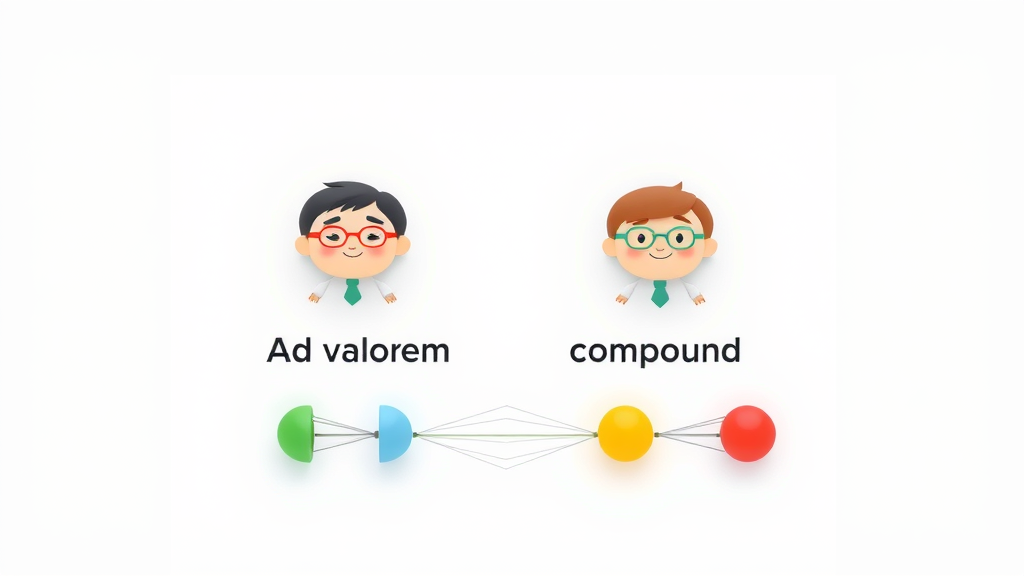
There’s more than one way for nations to design a tariff. The main types are ad valorem tariffs (calculated as a percentage of the product’s value), specific tariffs (a set amount per unit), compound tariffs (a combination of ad valorem and specific), and tariff-rate quotas (allowing a certain quantity at a lower tariff before higher rates kick in). Each type serves different strategic goals—from precise industry protection to flexible policy tools that can be easily adjusted based on political need.
Choosing which type to impose involves trade-offs. Ad valorem tariffs fluctuate with market prices and are often chosen for their relative fairness. In contrast, specific tariffs provide certainty but may not reflect true market value. Compound tariffs cover both bases, while tariff-rate quotas offer a way to encourage minimal imports while penalizing excessive shipments. The choice a government makes can dramatically influence a country’s trade deficit , market access for overseas partners, and day-to-day business planning.
| Type | Description | Examples | Impact |
|---|---|---|---|
| Ad Valorem | Percentage of the value of the imported good. | 15% on imported cars. | Adjusts with market value; impacts consumer prices directly. |
| Specific | Fixed amount per physical unit of product. | $0.50 per kilogram of imported cheese. | Provides predictable revenue; less reactive to price changes. |
| Compound | Combination of ad valorem and specific tariffs. | 10% of value plus $2 per unit of electronics. | Blends benefits of both methods—stable yet flexible. |
| Tariff-Rate Quota | Lower tariff up to a quota; higher rates thereafter. | First 1,000 tons of sugar at 5%, rest at 25%. | Protects domestic supply beyond a designated threshold. |
International Trade Tariffs in AP Human Geography: Concepts and Applications
- Explore how tariffs are introduced in AP Human Geography and why understanding them is crucial for students of geography and economics.
In AP Human Geography, international trade tariffs are presented as instruments that shape entire spatial patterns of global economic activity. Students learn how these government-imposed taxes alter trade flows, encourage or discourage particular industrial developments, and become part of the fabric of regional specialization. A critical component in understanding the “why” and “where” of economic landscapes, tariffs explain why some regions flourish while others fall behind.
By analyzing contemporary case studies, AP Human Geography connects tariffs to broader concepts like globalization, regional integration, and economic interdependence. Students come to appreciate how political boundaries interact with trade policy, leading to unique economic geographies characterized by winners and losers. With their grounding in global trade and spatial analysis, students are ready to tackle real-world debates—including the controversial use of tariffs as tools for national advantage or as weapons in trade wars .

Presidential Power: The Trump Administration and Imposed Tariffs
President Donald Trump, the Trade War, and National Emergency Declarations
- Assess how president Trump’s trade policies impacted international trade tariffs and the broader global trade landscape.
The Trump administration fundamentally changed the conversation around international trade with aggressive tariff measures aimed initially at China, but quickly expanding to trading partners globally. President Trump invoked emergency economic powers under longstanding laws—including the International Emergency Economic Powers Act —to impose tariffs on steel, aluminum, and a range of consumer goods. This was marketed as a bid to revive American manufacturing and restore what the administration saw as “fair trade.”
"Trade wars are good, and easy to win" – President Donald Trump.
While the intention was to reduce the U.S. trade deficit and bring jobs back home, the reality proved far more complicated. The trade war with China escalated, leading to retaliatory tariffs , disruptions in established supply chains , and unexpected costs for both businesses and consumers. Major industrial sectors like steel, manufacturing, and agriculture experienced both the intended protections and unintended side effects—ranging from boosted domestic production to increased input costs, global uncertainty, and diplomatic rifts with long-standing allies.
Tariff Rate Changes: The Battle Over Steel and Aluminum
- Delve into the imposition of tariffs on steel and aluminum, changes in tariff rates, and effects on the international supply chain.
The imposition of tariffs on steel and aluminum marked a significant escalation in contemporary trade battles. In 2018, the U.S. applied new tariff rates of 25% on steel and 10% on aluminum imports from a host of trading partners, citing national security concerns. This move aimed to protect domestic producers but swiftly resulted in higher costs for downstream industries reliant on these metals—from automakers to construction firms and appliance manufacturers.
As trading partners raced to respond, global supply chains were severely disrupted. Companies reliant on competitively priced steel and aluminum faced hard choices: pass costs to consumers, absorb losses, or relocate production. Simultaneously, retaliatory tariffs from the EU, China, and others targeted American products in response, creating a maze of new barriers and red tape. The impact: increased product prices, lost export markets, and an overall slowdown in global trade .

United States Trade Agreements and Their Role in Shaping International Trade Tariffs
- Review significant trade agreements—such as NAFTA, USMCA, and WTO rules—and their relationship with international trade tariffs.
Over the decades, the United States has used a network of trade agreements to shape the contours of global commerce and influence international trade tariffs . Examples like NAFTA (the North American Free Trade Agreement) and its successor, USMCA, have dramatically reduced barriers among the U.S., Canada, and Mexico—boosting cross-border investment and encouraging economic integration. Concurrently, the World Trade Organization (WTO) maintains a system of rules that limits how and when nations can impose tariffs, with the goal of steady, predictable global trade.
However, even the best-crafted agreements can become flashpoints during periods of economic or political strain. When one party feels disadvantaged—such as when the U.S. cited national security to levy new tariffs—disputes are triggered, leading to renegotiations, complaints before international bodies, or unilateral acts. For businesses active across borders, understanding the specifics of each trade agreement is essential to navigate risks, identify opportunities, and remain resilient in an unpredictable global economy.
How International Trade Tariffs Spark Global Trade Wars
Retaliatory Tariffs and their Fallout
- Break down major instances of retaliatory tariffs and their economic costs.
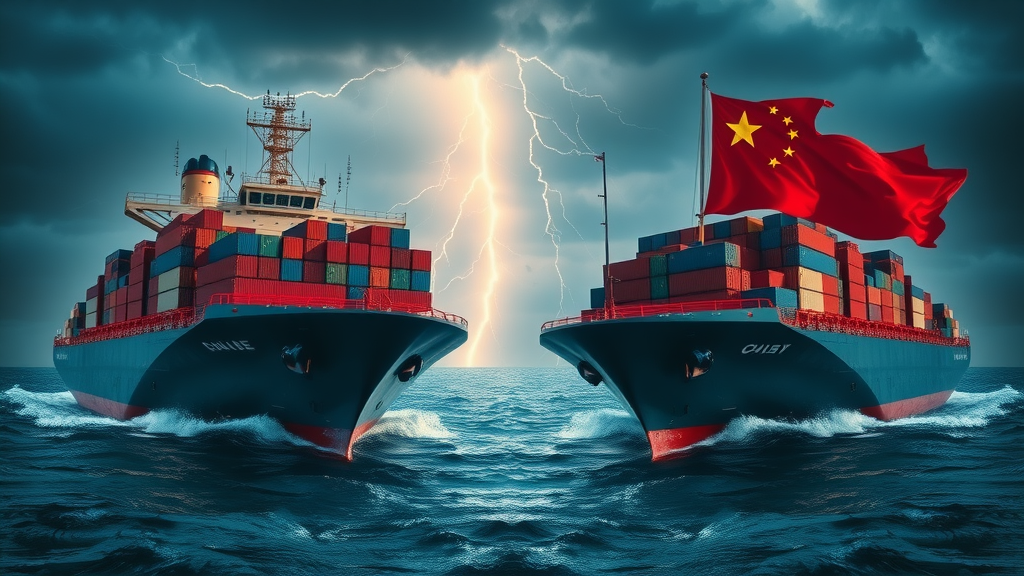
One of the most visible consequences of tariff increases is the phenomenon known as the trade war . When one nation chooses to impose tariffs on another, the targeted country often responds in kind with retaliatory tariffs . This tit-for-tat escalates tensions, reduces trade volumes, and damages industries on both sides of the border. Throughout the international trade conflict with China, for example, American farmers lost a massive export market for soybeans, while U.S. manufacturers confronted sharply higher import costs for components vital to their products.
The economic fallout can be severe—shifting trade flows, unsettling financial markets, and forcing multinational businesses to revisit strategies as formerly reliable supply routes become economically unviable. The repeated imposition of retaliatory measures can ultimately leave both countries worse off, with lost jobs and slower economic growth, contrary to the original intent of aiding domestic industries.
Tariffs, National Security, and Economic Justifications
- Consider the rationale of national security and how it's been used to defend international trade tariffs.
Governments often cite national security as the justification for imposing tariffs on certain goods. This rationale allows leaders to bypass normal free-trade agreements and introduce measures designed to keep “strategic” industries—particularly in defense, manufacturing, and energy—under domestic control. The Trump administration used this reasoning to justify tariffs on steel and aluminum, arguing that maintaining local production capacity was vital to the country’s security interests.
While this argument invites widespread debate, it reflects a critical tension in international economics: the balance between economic efficiency and national sovereignty. Critics contend that using national security as a catch-all justification opens the door to protectionism and weakens the rules-based trade order, but supporters argue it’s sometimes necessary to maintain control over critical infrastructure and technology. Understanding these motives is key to disentangling the complex and sometimes contradictory logic behind international trade tariffs .
The Hidden Costs: How Trade Deficits and Supply Chains Are Transformed by International Trade Tariffs
- Reveal the unintended outcomes on trade deficits, global supply chains, and domestic consumers.
The less-visible effects of international trade tariffs often lurk at the intersection of trade deficits , global supply chains , and the wallets of everyday consumers. Higher tariffs typically drive up prices on imported goods , transferring costs not only to businesses but also to households. Paradoxically, these policies can also widen the trade deficit —the gap between imports and exports—if local industries fail to substitute foreign goods efficiently or if trading partners retaliate by targeting key export sectors.
At the supply chain level, tariffs force companies to overhaul logistics, find alternative suppliers, or relocate assembly operations, resulting in long-term strategic shifts. For consumers, the costs of goods from cars to electronics to groceries rise, often with little warning or recourse. Ultimately, the web of unintended consequences means that the “hidden” price of tariffs often far exceeds what is initially promised by policymakers.

Lists: Top Five Most Impacted Sectors by International Trade Tariffs
- Automotive
- Agriculture
- Technology
- Steel and Aluminum
- Consumer Goods
These sectors face the steepest challenges when international trade tariffs shift. Because of their cross-border supply chains and the international nature of their inputs and markets, even small tariff rate changes can translate into millions in increased costs or lost revenue. For instance, the automotive sector handles complex global supply chains with parts crossing multiple borders before final assembly, amplifying the effects of tariffs at every stage.
Agriculture and consumer goods also feel the blow acutely, as retaliatory tariffs from trading partners can close off valuable export destinations while making raw materials and finished products more expensive to import. Technology and steel/aluminum sectors find themselves doubly affected—both from increased costs for critical materials and from potential loss of foreign markets due to ongoing trade disputes.
Video: Explained – Understanding the Mechanics of International Trade Tariffs
- Short educational video demonstrating how tariffs are set, adjusted, and their cascading impact.
This animated walkthrough will show step-by-step how tariffs are imposed, how they change in response to policy shifts, and the real-world impact on businesses and consumers across several industries.
Video: Global Trade in Action – Real Case Studies of Tariff Consequences
- Documentary-style clips featuring interviews with business leaders and policymakers on international trade tariffs.
Watch key players in business and government describe first-hand the challenges and strategies they adopted to survive and thrive during recent waves of international trade tariffs and retaliatory moves.
People Also Ask: What is a tariff in international trade?
- A tariff in international trade is a government-imposed tax on imported or exported goods, used to protect domestic industries, control trade flow, or generate revenue.
Tariffs are a primary tool in national trade policy —they affect how much of a product is imported, encourage (or discourage) trade flows, and can boost or restrict the revenue that governments collect from foreign goods. They also serve as a lever in trade negotiations and are one of the oldest forms of economic regulation.
People Also Ask: What are the 4 types of tariffs?
- The four main types are ad valorem, specific, compound, and tariff-rate quotas, each with distinct characteristics and policy implications.
Ad valorem tariffs apply a percentage, specific tariffs set a fixed fee, compound tariffs use a combination, and tariff-rate quotas vary based on the quantity of imports. Each type aligns with different government goals—from raising revenue to tightly regulating particular imported goods.
People Also Ask: What is a tariff AP Human Geography?
- In AP Human Geography, a tariff is discussed as a tool used by governments to regulate international trade and influence spatial patterns of global economic activity.
Tariffs are introduced as central to the way nations organize economic activity, impacting trade routes, the clustering of industries, and global supply networks. Their use is analyzed for both their geopolitical and their economic effects in shaping the world map of commerce.
People Also Ask: What are the effects of international trade tariffs?
- Tariffs can lower trade volumes, increase consumer costs, disrupt supply chains, and provoke trade retaliation, but may also protect certain domestic industries.
The outcomes of international trade tariffs are often double-edged: while aiming to shield vulnerable sectors, they can just as easily trigger trade retaliation and make everyday goods more expensive. History shows their effects are complex and frequently unpredictable.
Frequently Asked Questions About International Trade Tariffs
- Do all countries use tariffs? Most nations utilize tariffs, though their prevalence and strategic use vary widely. Some countries emphasize free trade and keep tariffs low, while others impose high rates for protection or fiscal reasons.
- What prompts governments to raise or lower tariffs? Tariff changes are typically driven by shifts in economic policy, changes in international relationships, domestic political pressure, or sudden changes in the global economy.
- How do consumers feel the impact? Consumers experience tariffs indirectly as higher prices on imported goods and sometimes domestically produced goods that use imported parts or materials.
- Can tariffs help fix trade imbalances? While tariffs are intended to reduce imports and improve trade deficits, effects are often mixed—sometimes worsening imbalances if partners retaliate or if domestic industries cannot meet demand.
Final Thoughts on International Trade Tariffs and Their Far-Reaching Costs
- Examine why understanding the complex ramifications of international trade tariffs is essential for informed public discourse and policy. Encourage readers to assess headline debates through a deeper, more critical lens.
To foster better decisions in a rapidly evolving world, take time to scrutinize policy claims about tariffs—and always consider the deeper, often hidden, global impact before judging their merits.





Write A Comment