







Add Row
Add Element
Global Trade News
update
Global Trade News
update
Add Element
SCHEDULE YOUR INTERVIEW 
  • Home
  • Categories
    • Policy Pulse
    • Compliance Corner
    • Market Movers
    • Trade Trends
    • Export Essentials
    • Import Insights
    • Regulatory Roundup
    • Global Trade News Blog
    • More Spotlights
    • More Videos
  • update
  • update
  • update
  • update
  • update
  • update
  • update
April 26.2025
2 Minutes Read

How Trump Tariffs Impact Lower-Income Americans More Than The Rich

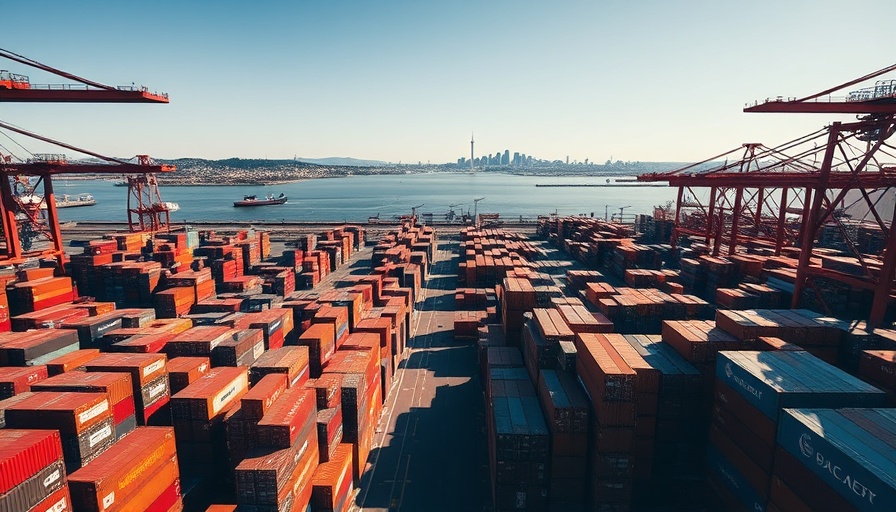
Shipping port with containers and Seattle skyline, illustrating economic themes.

The Ripple Effect of Trump’s Tariffs on American Households

As President Donald Trump's tariffs are set to reshape the economic landscape of the United States, a recent analysis reveals a troubling reality. The tariffs, pushed during his second term, are projected to disproportionately affect lower-income households. In fact, individuals belonging to the bottom 20% income bracket, which consists of those earning less than $29,000 a year, are expected to face a tax increase equivalent to 6.2% of their annual income. Conversely, those in the top 1%, making over $915,000 yearly, would see a much smaller tax rise of merely 1.7% of their income. This stark disparity highlights how economic policies can deepen existing inequalities.

Understanding Tariffs: Taxes in Disguise

It’s essential to recognize that tariffs function as a tax on imported goods, which importers pay but often pass down to consumers. The Heritage Foundation has characterized tariffs as a "tax on Americans by another name." They argue that this tax increases prices on essential goods such as food and clothing, which form a larger portion of a low-income household’s budget. For families already struggling to make ends meet, higher prices due to tariffs can significantly affect their quality of life.

Long-Term Implications: A Systematic Burden

Federal policymakers must consider the long-term effects of these tariffs. While short-term revenue generation from tariffs might seem beneficial, the costs disproportionately borne by the poor indicate a flawed strategy that could widen the gap between the wealthy and low-income earners. If tariffs remain enforced without corresponding considerations for lower-income families, the social fabric of American society may fray even further, leading to greater economic disparities.

Future Predictions: What Lies Ahead

Moving forward, it’s crucial to analyze potential shifts that may arise due to these tariffs. If businesses decide to raise prices significantly, consumer spending will likely be impacted, causing a ripple effect in the broader economy. The most vulnerable populations could find themselves trapped in a cycle of poverty, struggling with increasing living costs while stagnant or reducing income opportunities.

Your Role: Understanding Economic Policies

As consumers, it's vital to stay informed about the implications of national policies on our daily lives. Understanding how tariffs affect the products we buy allows for more informed decisions as consumers and responsible citizens. Encouraging discussions around such policies can foster a more inclusive economic dialogue and hold leaders accountable for their impact on the community.

In conclusion, while tariffs might be presented as a necessary economic strategy, we must consider their true costs and who truly bears the burden. Staying informed and advocating for equitable policies could pave the way for a fairer economic system that serves all segments of society, not just the wealthiest.

Market Movers

64 Views

Write A Comment

*
*
Related Posts All Posts
01.29.2026

Metalformers Brace for 2026: Increased Confidence Amid Tariff Challenges

Update Metalformers Enter 2026 with Renewed Confidence The latest January 2026 Business Conditions Report from the Precision Metalforming Association (PMA) reveals a notable surge in confidence among metal forming manufacturers. Following a previously challenging year marked by shipping declines, manufacturers are looking forward to what they anticipate will be a more optimistic economic climate. With 26% of respondents forecasting an increase in general economic activity for the upcoming quarter, this marks a clear upward trend from just 14% in November. Understanding the Tariff Impact The growing confidence among metal formers comes against a backdrop of evolving trade dynamics and tariff regulations. Tariffs on imported metals and finished goods have reshaped the landscape, prompting many manufacturers to reassess their strategies. The current focus on agility and responsive production cycles due to these tariffs allows metal formers to capitalize on domestic demand, significantly affecting their outlook for 2026. Statistics that Speak Volumes According to the recent survey, 48% of manufacturers expect an increase in incoming orders over the next three months, a substantial rise from 31% in November. These statistics underscore the resilience that the metal forming industry displayed throughout 2025. Despite lower shipping levels and existing challenges, manufacturers are preparing for growth as they adapt their business models. The Importance of Automation and Flexibility As the industry gears up for 2026, one of the key themes emerging is the balance between automation and flexibility. While full automation is increasingly seen as beneficial in high-volume settings, many mid-market manufacturers are opting for a more flexible approach that allows them to pivot quickly between different production runs. This dual strategy not only mitigates risk posed by tariff-induced demand volatility but also improves operational efficiency. Future Predictions: What to Expect Looking ahead, experts suggest that automation will continue to play a pivotal role in shaping the manufacturing landscape. AI integration into production processes can streamline expenditure and enhance operational efficiency, yet the ability to shift quickly between jobs remains equally valuable. The success of small and mid-sized manufacturers in 2026 may hinge on their readiness to adapt to fast-changing market demands. Building a Supportive Policy Environment PMA's President, David Klotz, emphasizes the need for a stable policy environment to support the positive momentum within the industry. Manufacturers are calling for policy interventions that address these uncertainties and foster domestic manufacturing growth. With advocacy teams actively engaging in Washington D.C., there is hope for a legislative landscape that aligns with the industry’s needs moving forward. Decisions Metalformers Can Make With This Information The data from the January report shouldn't just be seen as numbers; they carry significant implications for strategic planning and investment. Manufacturers are encouraged to assess their operational capacities and market positions in light of these insights. Understanding the direction of customer demands, driven by shifts in tariffs and domestic policies, enables companies to make informed decisions that could enhance their market position. Your Role in this Evolving Industry Environment For those involved in the metal forming industry, recognizing the importance of agility and staying informed about tariff impacts should be a priority. Engaging with available resources, attending industry events, and leveraging surveys can provide critical insights that guide company strategy. It is essential for manufacturers to adapt continuously as they navigate the complexities of 2026 and beyond. As metal forming manufacturers enter 2026, the environment is rife with potential. By understanding the implications of the latest reporting, assessing operational strategies, and maintaining responsiveness, companies can not only weather the storm but thrive in the changing landscape. Stay proactive!

01.21.2026

Metalformers Report Decline in Shipments but Optimism for 2026

Explore the latest insights from metalformers as they report declining shipments, yet anticipate improved economic conditions, highlighting the impact of tariffs and workforce trends.

01.18.2026

Manufacturers Navigate Shifting Economic Conditions: Insights for November 2025

Manufacturers' outlook for economic activity remains steady, despite a dip in shipping levels. Explore detailed insights and trends impacting the metal forming industry.

Terms of Service

Privacy Policy

Core Modal Title

Sorry, no results found

You Might Find These Articles Interesting

T
Please Check Your Email
We Will Be Following Up Shortly
*
*
*