Add Row
Add Element
Global Trade News
update
Global Trade News
update
Add Element
SCHEDULE YOUR INTERVIEW 
  • Home
  • Categories
    • Policy Pulse
    • Compliance Corner
    • Market Movers
    • Trade Trends
    • Export Essentials
    • Import Insights
    • Regulatory Roundup
    • Global Trade News Blog
    • More Spotlights
    • More Videos
  • update
  • update
  • update
  • update
  • update
  • update
  • update
April 24.2025
2 Minutes Read

Cleveland Fed's Hammack Urges Patience on Tariffs: What You Should Know

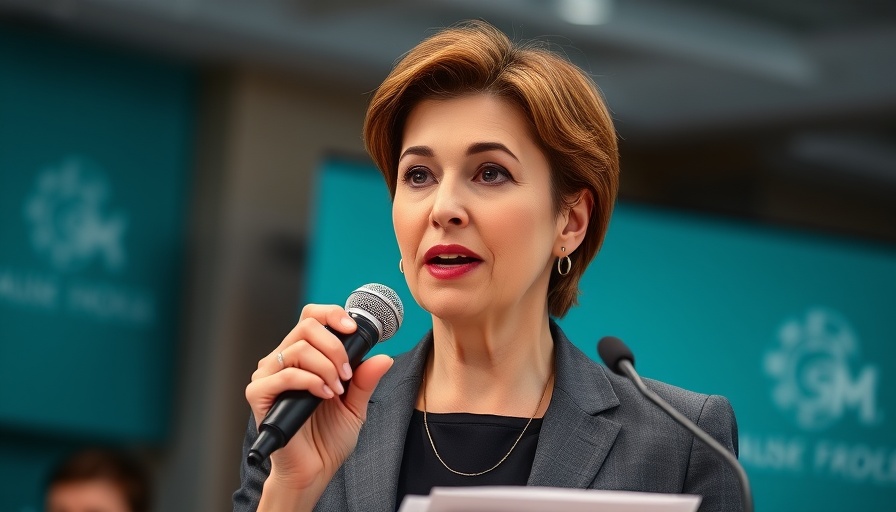
Female speaker at event discussing assessing tariff impact on economy.

The Importance of Patience in Economic Policy

In an era of fluctuating economies and trade uncertainties, Federal Reserve's Cleveland President Beth Hammack emphasizes a critical approach to understanding the impacts of tariffs on inflation and employment. Since her appointment in August 2024, Hammack has observed a high level of uncertainty in economic conditions. In her recent interview with CNBC's "Squawk Box," she urged policymakers to exercise patience in their assessments, stating, "I think we need to be patient. I think this is a time when we want to make sure we're moving in the right direction, rather than moving too quickly in the wrong direction." This perspective is crucial as it helps illustrate the need for careful consideration before making significant policy shifts that could have lasting impacts on the market.

Current Economic Climate: High Uncertainty

Amidst the ongoing impacts of President Donald Trump's tariffs, Hammack's viewpoint resonates strongly with the current economic landscape. Tariffs can have both immediate and long-term effects on inflation, often complicating the Federal Reserve's dual mandate of promoting maximum employment and stabilizing prices. By choosing to analyze data thoroughly before making any decisions, Hammack is reflecting a measured response to what many see as a highly unpredictable situation. Recent comments from other central bank officials, including Chair Jerome Powell, have mirrored her sentiment, emphasizing the complexities in balancing inflation pressures with employment rates.

Balancing the Dual Mandate

Hammack's insights highlight a dilemma many policymakers face: how to harmonize two often conflicting goals. "If it's higher inflation, lower employment, that's where things get really complicated," she noted. This statement captures the delicate balance that must be maintained in monetary policy. The uncertainty surrounding tariffs could potentially exacerbate these conflicts, further complicating the Fed's task of ensuring economic stability.

A Call for Comprehensive Data Analysis

In her commitment to a data-driven approach, Hammack has called attention to the importance of relying on 'hard data,' which she described as "actually really good." Engaging with robust data allows policymakers to identify trends and make decisions that benefit the economy in the long run. This sentiment serves as a reminder of the necessity for data analytics in financial decision-making, especially during turbulent times.

What Lies Ahead? Future Predictions and Insights

Looking into the future, Hammack's call for patience could lead to a more stable economic environment. With careful monitoring of data and an analytical approach towards tariffs and their broader implications, there remains hope for a coherent strategy that addresses inflation without sacrificing job growth. For individuals interested in global finance, understanding the ripple effects of these policies could provide significant insights into potential market trends and investment opportunities.

While the road ahead may be filled with challenges, Hammack’s prudent approach may serve as a guide for policymakers and entrepreneurs alike. As Hammack concluded, it is essential to navigate thoughtfully through the uncertainty to arrive at decisions that bolster the economy.

Market Movers

71 Views

Write A Comment

*
*
Related Posts All Posts
02.25.2026

Metalformers in 2026: Resilience Amid Tariff Impacts and Thriving Orders

Update Understanding the Current Climate of Metal Forming The landscape for metal formers and fabricators has undergone significant changes as we step into 2026. With a rise in orders and a steady outlook, manufacturers are showing impressive resilience. Amidst challenges, including tariff impacts and inflation, these professionals are adopting strategies to maintain competitiveness. How Tariff Impacts Shape Strategies The uncertainty around tariffs continues to shift priorities for manufacturers. As U.S. supply chains grapple with disruptions, many companies are opting to bring operations closer to home, favoring domestic and nearshoring methods, particularly with ties to Mexico strengthening while Canada sees a decline. This strategy not only minimizes the impact of tariffs but also allows for greater agility in production. Why Flexibility is Key for Businesses Flexibility has emerged as a vital strength for metal formers. Rather than fully automating their processes—a trend that may dominate high-volume environments—many mid-market manufacturers find success through adaptable systems that can quickly shift between jobs. This agility helps them cater to shorter runs and fluctuating demand without heavy investments in automation. The Rise of Intelligent Automation While full automation may not work for every manufacturer, advanced technologies are making their way into routine operations. In 2026, intelligent systems—powered by artificial intelligence—will enhance productivity by improving tasks such as inventory management and accounting. The integration of AI not only streamlines processes but also presents data in actionable formats that facilitate quicker decision-making. Pricing Strategies in an Inflationary Era With inflation presenting you with a complex challenge, manufacturing professionals must frequently adjust pricing to remain competitive. Rather than absorbing increasing costs, the industry is trending towards a ‘pass it on’ model, where manufacturers adjust prices to reflect rising costs. This dynamic highlights the need for robust enterprise resource planning (ERP) systems to seamlessly navigate pricing strategies amidst volatility. Looking Ahead: Predictions for 2026 The landscape of metal forming and fabrication is set to evolve dramatically. Industry consolidation is likely to accelerate as more owner-operators sell to investment firms and buyer-friendly market conditions emerge. Furthermore, as demand increases and excess capacity clears, manufacturers may find themselves better positioned for growth in the years to come. Actionable Insights for Manufacturers For manufacturers keen to navigate these changes, creating a well-rounded approach that combines automation with flexibility is essential. Investing in training for operators and integrating modern primary production assets can create a competitive edge. Emphasizing quality assurance and agile manufacturing processes will better position businesses to adapt and thrive in an uncertain market. As the market continues to stabilize, staying informed about tariff implications and maintaining a flexible production strategy will serve as essential safeguards. The resilience of manufacturers in responding to challenges will define their success in 2026 and beyond. Want to dive deeper into these trends? Understanding the impacts of economic changes, including tariffs, can significantly enhance your business strategy and keep you ahead of the curve. Don't miss out on valuable information that could help you thrive.

01.29.2026

Metalformers Brace for 2026: Increased Confidence Amid Tariff Challenges

Update Metalformers Enter 2026 with Renewed Confidence The latest January 2026 Business Conditions Report from the Precision Metalforming Association (PMA) reveals a notable surge in confidence among metal forming manufacturers. Following a previously challenging year marked by shipping declines, manufacturers are looking forward to what they anticipate will be a more optimistic economic climate. With 26% of respondents forecasting an increase in general economic activity for the upcoming quarter, this marks a clear upward trend from just 14% in November. Understanding the Tariff Impact The growing confidence among metal formers comes against a backdrop of evolving trade dynamics and tariff regulations. Tariffs on imported metals and finished goods have reshaped the landscape, prompting many manufacturers to reassess their strategies. The current focus on agility and responsive production cycles due to these tariffs allows metal formers to capitalize on domestic demand, significantly affecting their outlook for 2026. Statistics that Speak Volumes According to the recent survey, 48% of manufacturers expect an increase in incoming orders over the next three months, a substantial rise from 31% in November. These statistics underscore the resilience that the metal forming industry displayed throughout 2025. Despite lower shipping levels and existing challenges, manufacturers are preparing for growth as they adapt their business models. The Importance of Automation and Flexibility As the industry gears up for 2026, one of the key themes emerging is the balance between automation and flexibility. While full automation is increasingly seen as beneficial in high-volume settings, many mid-market manufacturers are opting for a more flexible approach that allows them to pivot quickly between different production runs. This dual strategy not only mitigates risk posed by tariff-induced demand volatility but also improves operational efficiency. Future Predictions: What to Expect Looking ahead, experts suggest that automation will continue to play a pivotal role in shaping the manufacturing landscape. AI integration into production processes can streamline expenditure and enhance operational efficiency, yet the ability to shift quickly between jobs remains equally valuable. The success of small and mid-sized manufacturers in 2026 may hinge on their readiness to adapt to fast-changing market demands. Building a Supportive Policy Environment PMA's President, David Klotz, emphasizes the need for a stable policy environment to support the positive momentum within the industry. Manufacturers are calling for policy interventions that address these uncertainties and foster domestic manufacturing growth. With advocacy teams actively engaging in Washington D.C., there is hope for a legislative landscape that aligns with the industry’s needs moving forward. Decisions Metalformers Can Make With This Information The data from the January report shouldn't just be seen as numbers; they carry significant implications for strategic planning and investment. Manufacturers are encouraged to assess their operational capacities and market positions in light of these insights. Understanding the direction of customer demands, driven by shifts in tariffs and domestic policies, enables companies to make informed decisions that could enhance their market position. Your Role in this Evolving Industry Environment For those involved in the metal forming industry, recognizing the importance of agility and staying informed about tariff impacts should be a priority. Engaging with available resources, attending industry events, and leveraging surveys can provide critical insights that guide company strategy. It is essential for manufacturers to adapt continuously as they navigate the complexities of 2026 and beyond. As metal forming manufacturers enter 2026, the environment is rife with potential. By understanding the implications of the latest reporting, assessing operational strategies, and maintaining responsiveness, companies can not only weather the storm but thrive in the changing landscape. Stay proactive!

01.21.2026

Metalformers Report Decline in Shipments but Optimism for 2026

Explore the latest insights from metalformers as they report declining shipments, yet anticipate improved economic conditions, highlighting the impact of tariffs and workforce trends.

Terms of Service

Privacy Policy

Core Modal Title

Sorry, no results found

You Might Find These Articles Interesting

T
Please Check Your Email
We Will Be Following Up Shortly
*
*
*