



Add Row
Add Element
Global Trade News
update
Global Trade News
update
Add Element
SCHEDULE YOUR INTERVIEW 
  • Home
  • Categories
    • Policy Pulse
    • Compliance Corner
    • Market Movers
    • Trade Trends
    • Export Essentials
    • Import Insights
    • Regulatory Roundup
    • Global Trade News Blog
    • More Spotlights
    • More Videos
  • update
  • update
  • update
  • update
  • update
  • update
  • update
March 03.2025
2 Minutes Read

100 Years of Ulbrich: What’s Next for Importer and Exporter Relationships?

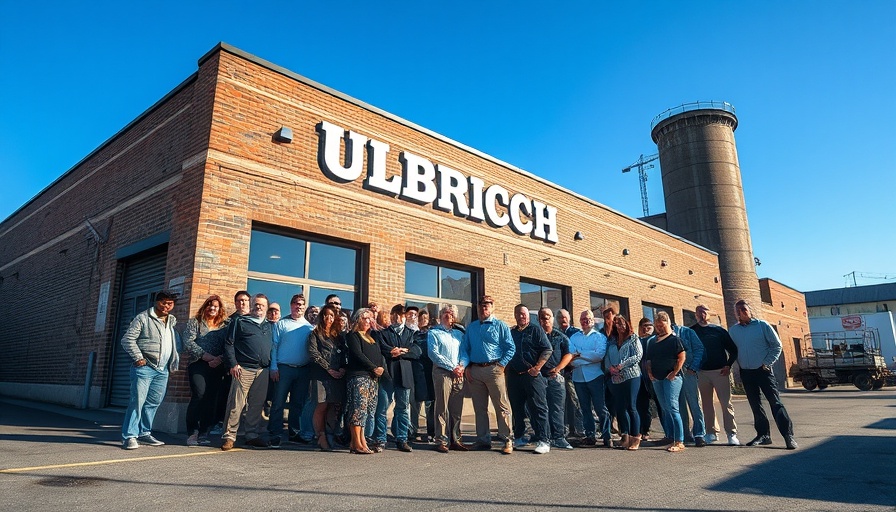
Future of Ulbrich: Group of employees outside brick building.

Celebrating a Century of Innovation: The Legacy of Ulbrich

This year marks a significant milestone for Ulbrich Stainless Steels & Special Metals, as the company celebrates 100 years of innovation and resilience in the metallurgy industry. Founded by Fred Ulbrich Sr. in 1924, the company has navigated through various challenges, including wars and economic downturns, to become a renowned expert in metal forming and distribution.

A Legacy Built on Excellence

Ulbrich began its journey by manufacturing cutlery and steadily evolved to focus on high-quality stainless steel and specialty metals. Its commitment to excellence is evident in every product they offer, from precision rolling to state-of-the-art annealing processes. Today, the company supplies vital components for various industries, including aerospace, automotive, and medical. This evolution showcases Ulbrich's adaptability and forward-thinking approach, which is crucial for surviving in today’s fast-paced global market.

Planning for the Next 100 Years

The second century for Ulbrich promises to be equally groundbreaking. With a strategic plan aimed at sustaining long-term growth, the company emphasizes the importance of innovation and customer relationships. The appointment of Gregg Boucher as Chairman-Elect of the Precision Metalforming Association demonstrates Ulbrich's commitment to industry leadership and collaboration, which are essential for future success.

The Importance of Strong Partnerships

Ulbrich’s strength lies not only in its products but also in its partnerships across different sectors. With a diversified portfolio servicing medical implants, aerospace components, and automotive systems, the company is well-positioned to continue expanding its market influence. Value in the supply chain is crucial, and companies looking to collaborate with Ulbrich will benefit from their dedication to quality, innovation, and service.

What’s Next for Importers and Exporters?

For importers and exporters in the metallurgy field, understanding Ulbrich's trajectory is vital. The company's evolution marks a trend towards increasing globalization within the metal forming industry. As industries worldwide demand high-quality materials, aligning with trusted producers like Ulbrich can enhance competitive advantage. Awareness of emerging markets, strategic sourcing, and technology-driven processes will be essential for those looking to navigate the complexities of international trade successfully.

Embracing the Future

The next 100 years for Ulbrich is not just about maintaining its legacy but also about harnessing new technologies and methods to lead in the industry. By embracing innovation, focusing on customer needs, and strengthening supply chains, Ulbrich is poised to remain a leader in the global market. As they step into their next century, the company’s commitment to excellence and partnership will continue to create value for their clients.

This journey of resilience and forward-thinking exemplifies how businesses can thrive through change. Whether you’re an importer, exporter, or simply an aficionado of industry innovation, the story of Ulbrich inspires confidence in the face of uncertainty.
Trade Trends

38 Views

Write A Comment

*
*
Related Posts All Posts
01.25.2026

Andy Burnham's Bid for Gorton and Denton: What It Means for Local Trade

Update Andy Burnham's Ambitious Return: A Testament to Local ValuesAndy Burnham, the current Mayor of Greater Manchester, has officially announced his intention to seek a return to Westminster by contesting the Gorton and Denton parliamentary by-election. Burnham's journey back to Parliament is not merely a personal aspiration; it represents a significant moment for the constituents he aims to serve and the principles he champions. He firmly believes that Manchester deserves a voice in the government that resonates with its values of unity and community.The Motivation Behind the BidIn a heartfelt letter to the Labour Party’s National Executive Committee (NEC), Burnham cited the recent political climate as a driving force behind his decision. He expressed concern over a “brand of politics which seeks to pit people against each other,” asserting that he feels a responsibility to lead Greater Manchester from the front during this critical time. His passion underscores a larger theme—the importance of political leaders remaining connected to the communities they serve.Responding to Challenges in Trade and EconomyFor import-export companies, Burnham’s bid may signify more than a shift in local governance. His leadership and potential return to Parliament can influence economic policies that directly impact this vital sector. The Greater Manchester area, a hub for trade and manufacturing, stands to benefit from Burnham’s experience and dedication to regional growth. Should his bid succeed, his focus on creating job opportunities and fostering a climate conducive to business could rejuvenate local trade initiatives, ultimately benefitting companies engaged in import and export transactions.Burnham’s Political Landscape: Support and OppositionWhile Burnham enjoys considerable support among his constituents and fellow Labour MPs, there are those within the party who might view his ambitions as a threat. With the Labour Party facing declining national popularity, the stakes are considerably high for all involved. Some party members have expressed the need for Burnham to demonstrate unwavering support for the current leadership, particularly that of Sir Keir Starmer. However, prominent figures like Deputy Labour Leader Lucy Powell and London Mayor Sadiq Khan have voiced their backing for Burnham’s candidacy, indicating a faction within the party that believes fresh leadership in the Commons is essential for revitalizing Labour's fortunes.Potential Impact on Local Politics and TradeIf Burnham is granted permission to stand and subsequently wins the Gorton and Denton seat, it could lead to the triggering of another mayoral election. The transition could be costly for both the Labour party and local taxpayers, presenting a unique challenge as Burnham seeks to balance his ambitions with the financial realities of British politics. His electoral success could, however, invigorate local confidence in the party, potentially leading to a resurgence in support at the grassroots level.Next Steps and Future ProspectsBurnham’s timeline is tight. He must navigate the NEC approval process and secure his position as a candidate amidst party dynamics and internal debates. Moreover, the political landscape is evolving, and while some anticipate a leadership challenge against Starmer following upcoming elections, others see Burnham's candidacy as potentially stabilizing force within the party. The Gorton and Denton constituency is historically Labour stronghold, winning with a significant majority in its last election. However, with the rise of alternative parties, Burnham's focus will need to be adaptive to secure victory and ensure the local voice remains prominent in Westminster.Conclusion: A Call for Local EngagementAndy Burnham’s journey back to Westminster stands as a call to action for citizens of Greater Manchester and stakeholders in the import-export sector. His aspirations to represent the region come at a crucial time for local governance and economic vitality. Engaging with local issues, advocating for stronger trade policies, and reinforcing community values will be pivotal as the political landscape continues to evolve. Supporting leaders who prioritize local needs can foster a robust political environment that ultimately benefits all constituents.

01.24.2026

Exploring Gold's Surge: Key Insights for Import-Export Companies

Update The Impact of Geopolitical Tensions on Gold Prices In recent weeks, geopolitical tensions have significantly influenced the price of gold, driving it toward its best weekly performance since 2008. The latest surge can be largely attributed to the rising conflict surrounding President Trump's attempts to acquire Greenland, an arena that has sparked widespread criticism and heightened international tensions. Investors typically seek out gold as a safe haven in times of uncertainty, and as such, the precious metal is experiencing a resurgence amidst fears of economic instability and trade disruptions. Understanding the Current Gold Rally Gold has always been regarded as a protective asset. With many investors shifting away from stock markets — spurred by potential tariffs and political discourse surrounding Europe and the U.S. — gold prices have skyrocketed. Analysts have noted that the price of gold reached unprecedented highs, as it climbed over 4,700 dollars this past week. Amid U.S.-European tensions, gold's role as a hedge against market volatility plays a critical role in its recent performance. Trade Wars and Gold Prices: A Deep Dive The implications of President Trump's controversial statements on potential tariffs against European allies have not only spurred political backlash but have also sent financial ripples across the world. Historically, trade wars can create economic uncertainty, which particularly affects export-driven economies. Import-export companies are ever-so-dependent on stable trade relations. With escalating tensions, uncertainty rises, driving more traders and investors into gold, further pushing prices up. In this fragile period, financial insights indicate that gold could offer a safe harbor for those involved in international trade. The Broader Implications on the Manufacturing Sector As the price of gold skyrockets, the manufacturing sector also feels the impact. The rising cost of materials influences both production costs and pricing strategies. Manufacturers must now adjust their operations as gold and silver see unprecedented price levels. For import-export companies, understanding these dynamics is essential for strategic planning. With increased metal prices likely affecting costs and margins, businesses need to rethink their pricing models while navigating through fluctuating markets. Actionable Insights for Import-Export Companies For businesses involved in import and export, now is the time to reassess your supply chains and coverage against price fluctuations. Establishing a financial buffer or 'safety net' in your operational budget can mitigate the risks associated with rising costs. With continued volatility expected, secure contracts for raw materials and commodities well ahead of anticipated changes. Regular monitoring of the geopolitical climate will equip companies to make informed decisions that could positively influence their bottom lines. Future Predictions: What Lies Ahead Looking forward, it’s vital for international traders and manufacturers to stay updated on forecasts regarding gold prices. The intersection of politics and economics suggests that ongoing geopolitical matters will remain influential. While gold's current rally appears robust, market analysts predict that its momentum may continue, provided that uncertainties linger in global affairs. As such, import-export companies stand to gain or lose significantly based on their adaptability to these dynamics. In summary, the recent rally in gold prices, driven by geopolitical conflicts and trade tensions, presents both challenges and opportunities for import-export companies. By staying informed and agile, businesses can harness these developments to bolster their financial strategies and thrive amidst uncertainty.

01.23.2026

NATO's Revamp of US-Danish Military Deal: Opportunities for Import-Export Companies

Update NATO's Strategic Moves: What This Means for BusinessesThe recent discussions between NATO Secretary General Mark Rutte and President Donald Trump regarding the U.S.-Danish military deal have broad implications for businesses involved in import-export activities, especially those focusing on trade with Greenland and Denmark. With heightened military awareness, there is growing potential for security investments in the Arctic region, ideally increasing market reliability for industries relying on stable geopolitical climates. This could be particularly beneficial for sectors such as manufacturing that depend on logistical efficiency and predictability in their trade routes.Understanding the Greenland Factor in Global TradeGreenland's position in the Arctic highlights its geopolitical significance, particularly regarding mineral resources that major powers like the U.S., Russia, and China eye. The framework deal aims to prevent adversarial encroachments by establishing key U.S. military support while respecting Denmark’s sovereignty over Greenland. For import-export companies, the growing interest in Arctic resources signals potential opportunities in trading rare earth elements and other valuable minerals. As businesses navigate these dynamics, keeping an eye on evolving regulations and negotiating terms will be critical to capitalizing on the potential economic benefits.The Broader Implications for Transatlantic RelationsThis shift in the U.S.-Danish negotiations sheds light on potential strains in transatlantic alliances. As European nations reassess their ties to the U.S. in light of Trump's past threats regarding Greenland and tariffs, businesses should prepare for potential market fluctuations stemming from these diplomatic tensions. Developing strategies that consider these risks will help organizations remain resilient against unpredictable shifts in trade relations. Establishing strong relationships with European partners can fortify your business against these changes.Actionable Insights for Import-export CompaniesFor companies directly involved in import-export services, it is prudent to stay informed on international agreements and military partnerships that could affect trade routes and regulations. Engage with trade organizations to obtain real-time insights and updates on security measures that may impact logistics. Moreover, developing contingency plans based on varying scenarios of military presence or geopolitical cooperation can position businesses for success in a fluctuating market landscape.Future Predictions: The Arctic as a Trade CorridorAs Arctic shipping routes open and the importance of resources in the region grows, the Arctic could become a focal point for international trade. With more nations interested in establishing footholds in this area, the market for mining and transportation services could see significant expansion. Import-export companies should prepare for an influx of investments in Arctic infrastructure and resources. Companies that proactively adapt to these upcoming changes will find themselves at the forefront of new trade opportunities.Conclusion: Adapting to a Changing LandscapeThe dialogue surrounding U.S.-Danish military negotiations features larger global implications that every import-export business should heed. By understanding the strategic developments in the Arctic and responding to shifting transatlantic relations, businesses can position themselves to harness emerging opportunities in an evolving landscape.

Terms of Service

Privacy Policy

Core Modal Title

Sorry, no results found

You Might Find These Articles Interesting

T
Please Check Your Email
We Will Be Following Up Shortly
*
*
*



